AAIG 2021 Summit Transcript – Dr. Carl E. Balita

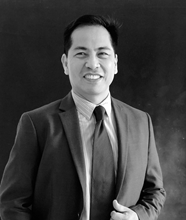
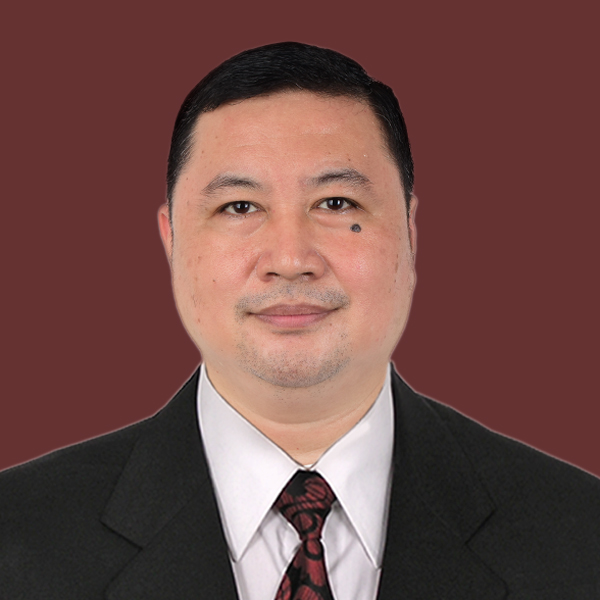
Carl E. Balita, EdD, RN, RM, LPT

Transformational Leadership

Good day everyone! Greetings of peaceful, prosperous, and of course, healthy day to all of you, I’d like to congratulate the UST Alumni Association and this powerful committee behind the Academe, Alumni, Industry and Government collaboration project which brings together the four major pillars of the educational system to transform it towards a better normal, not just the new normal. And the National Multisectoral Summit for Educational Transformation with the theme, for this part, Towards A Robust Ecosystem For Transformative Education. I’m very happy to be here and hopefully, I represent the academe, I represent the alumni, I represent the industry as well, and hopefully soon I will be able to represent government somehow to make a difference further. I have prepared the slides for you and I always get invited to speak about transformational leadership. And whenever I get invited for this, I can’t help but present to them that the transformative leadership is all about change, and change could come to us through, first, through a revolution which would be very bloody highly resisted or we can use evolution which will probably take forever and that’s the result we may be able to witness beyond our lifetime. And of course, the most important of them all is the transformation, a transformation which is from within and looking at it in a holistic point of view. Educational transformation, I’d like to first quote the World Economic Forum, who in 2020, predicted that there are three ways that Covid-19 would reshape education. And the first prediction they made is that education will be nudged and pushed to change, and this could lead to surprising innovation. Indeed things will never be the same again and we’re looking forward to this surprising innovation. The second one is very important; they predict, the World Economic Forum, predicted that the public and private educational partnership could grow in an important stage of our transformation. And lastly, this is a little threatening because this is where they predicted that the digital divide could actually widen. And furthermore, they predicted that the less affluent and digitally savvy individual’s families are, the further their students are left behind when classes transition online, these children lose out because of the cost of digital devices and data plan. And this is actually happening, the digital divide is felt already. And there’s a warning, or there is a an insight that, unless access costs decrease and quality of access increase in all countries, the gap of education or educational quality and that socioeconomic equality will be further exacerbated.

The digital divide, according to them, could become more extreme if educational access is dictated by access to the latest technology. I’d like to quote this because I’d like to begin with how they see it from that side of the world from a macro level. And there’s also some insights coming from UNESCO, and I like to present it to you in the education in the post-Covid world. There, they presented nine ideas for public action which could actually trigger the appreciation of that ecosystem we’re talking about. The nine ideas, it begins with number one: commit to strengthen education as a common good. And that’s why this becomes a common good that only of government and government agencies are related to education but also industry like what I represent from the Philippine Chamber of Commerce and Industry. The second is, expand the definition of the right to education so that it addresses the importance of connectivity and access to knowledge and information. There’s no problem with availability, but the problem really is the access and the connectivity. Value the teaching profession and teacher collaboration, it puts the teacher in the center stage once more. Number four, promotes student youth and children’s participation and rights. And number five; protect the social spaces provided by school as we transform education. There’s that social space being mentioned by the UNESCO. Another one is to make free and open source technologies available to teachers and students. There is an emphasis for free and open source technologies. This is really what’s happening right now, the Industry 4.0 which initially served as the biggest threat of a disruption, prior to the pandemic disruption, already made available free and open source technologies. It’s just a matter of the teachers and the students optimizing its use. Number seven in ensure scientific literacy within the curriculum, because the health condition brought about by this pandemic and the vaccinology and all those approaches we’re having, would really challenge our science literacy, and mind you, this is not going to be the last pandemic that we maybe may witness in fact. Protect domestic and international financing of public education. I’ll talk more about this in a little while. And of course lastly, is advance global solidarity to end the current level of inequality. And which is why this AAIG summit or collaboration is very ideal because this is trying to build the solidarity so that we can end the inequality.

The Philippine Chamber of Commerce and Industry (PCCI) launched a task force; we call it the Education Task Force (ETF). And this was, because in 2020, in October 2020, I wrote in my column in the Business Mirror, I challenge the business sector and explained why business sector should push for EdCom 4.0. At the time I thought we would still have time for the private sector to initiate or to call or to pressure the government to engage in EdCom 4.0, this happened in 2020. If you would like to look into this article, you may want to research Business Mirror Carl Balita and put EdCom, and this article would appear. I would have narrated here, I mean I narrated here the constitutional basis of education, the budget we’re giving education and some, you know, performances of our students in international tests which I don’t want to talk about anymore, because the business sector then, in April 28, 2021 called and launched the ETF. As you may see, we have the likes of Nilo Rosas, we have the likes of Ma’am Irene (Isaac) from TESDA, the president of Philippine Normal University Dr. (Bert) Tuga, and many others, of course under the leadership of Dr. (Alberto) Fenix who was also your speaker in one of the AAIG sessions we had.

Now in April 28, 2021 we launched this and for the past months we have been coming up with recommendations for innovations in Philippine education. And we looked into the quality model of the structure, the process and the outcome. I’m a quality practitioner, my company being an ISO certified company. I created this framework so that we can look into the structure, the processes and the outcomes of education. And here is why where the areas of development were defined. Of course the outcomes would look into the Philippine qualifications and the learning outcomes; the process would look into the curriculum and instruction and the competencies of teachers and educational leaders; and lastly of course the structure would like to look into institutional and policy reforms in education. I presented this, of course creatively; I created it as such that we will develop the PCCI framework in what we see as the Task Force Education Development Model. Alright, it looks into first the Philippine qualification and the learning outcomes, the curriculum and instruction, the competencies of teachers and educational leaders, and institutional policies for reform. And we looked into who is a learned, trained and educated Filipino on that side, for the future, the country and the world. Then after that, what to teach and how to teach learner in the learning environments became the challenge of the curriculum and instruction. And who will teach and lead learning, that’s on the third quadrant that we call. And lastly, the Educational System, so that we see it in a whole ecosystem.

Today, I’ll be presenting some of the recommendations; some of them are my own legislative agenda. As you may have known, much as you may have heard, I’m taking this courage to stand up for education for health and for micro business and I’m running for the Senate, and I’ll be presenting to you some of my legislative agenda. First of all, on the outcome, learning to learn became a challenge and managing one’s own learning becomes a must, must be a basic competence. The WHO, I mean, the UNESCO gave us the learning to know, learning to do, learning to be, and learning to live together. But eventually the learning to learn became a very basic competence and the ability of the person to manage own learning becomes an important element. Here is where the lifelong learning is born and the philosophy or the wish of every Filipino families na makatapos should be translated and should be transformed into continuous learning. You know, I would always be very concerned when professionals themselves right now would propose that I, if ever I win, I should abolish the CPD. Of course, as a responsible professional my response would always be, continuing professional development is our responsibility, we just have to look into some systems to consider formal, non-formal and informal sources so that, I think the only problem they have of the CPD, for example, is the cost. And this is why they want to give up on the lifelong learning challenge of being a professional because it becomes too costly. So it’s really a matter of creativity and innovation to make it happen. Now this is according to Mckinsey, who conducted a study, there is a new set of foundational skills and these are the following: the first one is a person in the future. for the future. should be able to add value beyond automated systems and intelligent machines. Also, everyone in the future should be able to operate in a digital environment. And lastly, that the person of the future should be able to continually adopt to new ways of working and to new occupations. We will soon be working in industries that are not known to us now, and we are not educating our students our learners for the present but we’re educating them for the future which is a VUCA world, you know. I mean, currently this is already a VUCA world and the future is even a VUCAH with an “H”.  VUCA is, we all know about it probably, it’s the volatility, it’s the uncertainty, complexity and the ambiguity. And there is an added letter which is ”H”, hostile, according to how we have experienced this pandemic. But as you know, as a positive mindset educator and advocate, I don’t want to see, I don’t want to remember VUCA for those translation. But I want, if indeed there is volatility, don’t you think that we should focus on the vision. If you really think that the world is full of uncertainty, don’t you think that we should, you know, endeavor to understand, to understanding? If indeed the world is so complex, don’t you think that we should be challenged to find its clarity? And if indeed the world is ambiguous, don’t you think that we should endeavor for agility? And the magic word in agility is actually collaboration. And isn’t it that if the world is really hostile now, then don’t you think that we should anchor ourselves to our humanity? So I’m proposing a different meaning for VUCA and a different new set of foundational skills that even Toffler said that the literacy of the future is not our ability to read and write, but our ability to learn, relearn and unlearn. Now, the 56 deltas across 13 skills group and four categories are identified, were identified already by Mckinsey related to this research which considered, you know, the industry input into what kind of competencies of people are we look looking in the future, looking for in the future. And cognitive is not memory anymore but it’s critical thinking, it’s planning and ways of working, it’s mental flexibility, it’s communication on the cognitive level. On the interpersonal level, this is mobilizing systems thinking, developing relationships and teamwork and effectiveness. And about self-leadership, it’s about me, it’s my ability to manage myself; it’s self-leadership which is anchored in self-awareness and self-management; entrepreneurship, which is my favorite; and goal achievement. And lastly, in the fourth quadrant you would find a fourth category, you could find here, a digital competency, it’s the digital fluency and citizenship. There is such a thing as digital citizenship. Software use and development, it’s your ability to use and develop and understanding the digital systems. The IQ that shifted to the EQ that shifted to the AQ and shifted to the SQ has now shifted into the DQ or digital intelligence. Now also, putting the spotlight on the most important person which is the teacher, of course, we have to realize that our teachers went through a pre-service, then when they get employed, into an in-service, to develop the quality teacher that they could be. But let’s take a look at some PRC report and see how it works. You know, technology will never replace a great teacher. And therefore, improving quality, teacher quality becomes of supreme importance for long-term and sustainable nation building; nation building one teacher at a time and in the classroom one learner at a time.

Now if we would look at our current scenario, there are one million teachers, about 800,000 in the public education system and 24 million learners and growing. So this shows to us that there will be a gap or a higher demand for teachers even as we go into the digital or blended or flexible or omni models of learning. I’d like to present to you, that in other countries, board exams are not given any more, like Hong Kong, japan, Korea Netherlands and Singapore. As you would see the second green circle there, certification is low or no stake anymore for them. But take a look at what is also in secret, that the left side, is their very high stake on entry of teacher education program. So they may have no board exam but they have very strict admission and retention. Now if we’re looking into this for the future, I think we really have to reinvent our in-service, I’m sorry, our pre-service teacher education. And look at this board examinees in the PRC, in 2018 prior to the onset of the pandemic, there were total of 353,000 takers followed by criminology, followed by nursing, civil engineering and accountancy. Okay this is the 2018 report, so it’s one third of a million people taking the left, and as you may wanna see it, in the general, among all those who took the board exam, the average passing is 38.7%. And if you would see, the passing history of the licensure exam for teachers, the blue lines represents the number of takers and the orange line represents the passer. And I’d like to tell you, that the average, as you can see, that the passing rate is rather really low. And if I may just zoom into it, okay, the most recent is 36, there was even a time that there was 19% passing and the highest recorded over the past how many years was actually 37.7%. So therefore, even as we have a rich supply of teachers, we would note that only about 35 or 30 something percent of them will make it in the board, about three to four out of all those who take will actually get the license. And that the DepEd of course would have a very beautiful process of hiring of and of retaining. They have a criteria, but the ETF made an observation that the criteria for ranking, some are rather highly subjective rather than objective and that also needs to be revisited so that we can really get the best teacher teachers. I have no doubt that there is a good supply of teachers, but we were wondering why out of the total teaching positions of 847,000, there is a 41,000 unfilled positions, this is as of April 2020. If indeed there is a good supply of teachers, why should there be a 41,000 unfilled position at that point. Maybe they aren’t coming or maybe they’ll get there soon but the point is, this attributes to, there’s an implication here, if this remain unfilled, of course there will be a higher teacher learner ratio, number one. And number two, because of the lack of other personnel, there is a possibility that the teacher will be doing the administrative jobs rather than just the teaching jobs. There will always be an implication. So if indeed the positions are available anyway, the recommendation will be to maximize and optimize these plantilla positions. Now are the teachers happy? Generally in the world, the teachers’ motivating factor is the teacher autonomy, their ability to do what they need to do on their own as professional: the professional factors, the working environment, the intrinsic value of becoming a teacher, and the extrinsic value that they get for the image that they make out of the teachers. Okay I also did the study, and it’s not in this presentation, but we made a study that many of us wanted to become teachers when we were young, but change it as we get older. But those who took up education, at least 70 to 80 percent of them did not regret that they took up education and they pursued their dream to become teachers. Okay the working environment, however, could be a demotivating factor and the teacher autonomy can also be a demotivating factor as well as the student attitude is found out to be, by research, to be demotivating. And this is something that I want to take very serious discussion. Take note that a teacher gets salary grade 11, and in 2019, there is, sorry the other one is 2023 the last one, so it will be given in four tranches. Currently, 2021, their salary is the entry salary of teachers is 23,800 it becomes 27,000 in 2023. Okay now teachers studied for four years, they took the board exam and then that’s where they land. The point here is, how will we be able to attract the best and the brightest if the public knows that the teachers are not paid well? For a professional to be getting this amount on a monthly basis, you would know that probably they’d rather they’d rather sell, you know, fish ball, because the fish ball vendor will probably earn more. Okay but to compare this with nurses; nurses struggled so long, the second picture indicates to you the salary of nurses in 2020, in 2021, 2022 and 2023, because nurses are getting salary grade 15. And of course this is not covered by the salary standardization law, but the policemen are getting 29,600 pesos. Probably this explains why there are more people who want to be policemen or nurses rather than become teachers. So unless we do something to attract the best and the brightest but the kind of life that they’ll get out of the profession, maybe it will not be able to really attract them to the profession. I also would like to present to you that assuming the salary now is 24,500 for teachers, in Thailand, Filipino teachers getting 30,000 pesos at least that’s why there are so many Filipinos who are going to Thailand. And again to compare the 24,000 salary of teachers in the Philippines, I’d like to compare it with domestic helper in Hong Kong who are receiving 37,000 pesos including their meal allowance, and of course without the pressure of having to, you know, to go to put on a makeup, to wear their uniform and so on. This explains to us, why many of the graduate of education would be found to be domestic helpers in Hong Kong, for some economic and practical reasons.

Well, one of the good things that happened in our ecosystem of education to transform it is the Philippine Qualifications Framework (PQF) which is our response to the Asean Qualification Reference Framework (AQRF) related to the mutual recognition arrangement. But you know, this was reviewed recently by the World Bank in 2021 and 2022. Just recently, they, realized that the activities of the Philippine qualification council and the working groups related to it have not been fully functional yet. In fact the composition is not yet finalized, and you will agree with me, the public awareness of PQF is very low and it is not something that they have presented to the private sector especially to that sector that will recognize, that who would recognize the levels or the qualification which is actually the business sector or the employment sector. And there is a limited alignment and revision of existing curricula and qualification standards. So this is a big work in progress because this actually gives us a snapshot of that ecosystem from basic education to technical education and skills development and the higher education. You would also notice here that there’s a question if indeed the grade 12 is part of the levels in the PQF. And you would notice that the lines are always upward, it does not consider the horizontal integration of qualification. And the challenges therefore is that the PQF descriptors have by-three domains in a progress uniformly across all levels and there is lack of clarity in the newly added senior high school TVL track in the PQF level, the tech-voc track which was the intention of the entrepreneurial exit in the k-12 and that employability concept of the k-12. And the credit transfer system based on clear standards and qualification really needs to be considered strongly, and the usefulness of PQF has not been presented to the private sector yet. These are some observations and that’s why one of the thing for us is to recognize that the learning outcomes based education will really have to be, not only talked about or you know learned about, but really it has to be something that we execute, the learning outcomes being the metrics of referencing to the AQRF. They are the fundamentals and the levels assigned to them. The thing is, unless we are authentic in our being outcomes-based in our education, then we’re losing the chance to even talk about the metrics of the referencing. And that’s why our proposal in the Educational Task Force is there should be a common OBE workshop for the technical experts of TESDA, CHED and even the regulatory boards, because we have noticed that lot of our graduates failed the board exam not because they did not learn but because there’s some gap with the competencies that were developed out of the tertiary education to the professional standards dictated by the future employers or the regulatory boards. So there has to be some alignment and this is our proposal. There is also, you might want to pursue and appreciate more developing credit transfer system which should support lifelong learning should the outcomes-based learner-centered quality assured, which is also very important, and that which supports in this institutional autonomy, supports academic freedom and would promote cooperation. We should zoom in to the Philippine credit transfer system if we really want the qualifications framework to work so that our professionals would be would have a better alignment with the rest of the world. There is a need to optimize the Republic Act 11230 which is the Tulong Trabaho which actually establishes the Philippine labor force and competencies competitiveness program and the Tulong Trabaho fund. This is beautiful because this applies to those who are not employed or not in education or training but wants to improve their competencies. And this is where the ecosystem really works. Those who are working, who are already employed but may need additional skills and competencies, may go back to school or might go back to training and continue in the pursuit of their lifelong learning skills, I mean lifelong learning responsibility and they become more capable of and productive.

I’d like to present a concept of the Individual Learning Accounts which may have been adopted overseas but this provides for funds made available to individuals to purchase training. The beauty of this is, it will be a demand-led approach and therefore this supports the training relevance and responsiveness for the employee, for example, because this is a fund which will be accessed so that the person improves with what he or she does, and this is the Individual Learning Accounts. This is something we want to pursue. I’m looking at how it can be integrated into some of the existing policies or create even policies in the future. I would like to propose, I mixed it up with my own and with that of the ETF, some legislative agenda that I look forward into pushing and advocating. The first one is the Law Institutionalizing the Nutrition and Feeding Program. As a health professional that I am, by the way I’m a nurse, I’m a midwife, I’m a licensed professional teacher and doctor of humanities and doctor of education, I become very concerned about kahit pa anong ganda ng curriculum mo at kahit anong galing ng guro mo, kung gutom ang batang tinuturuan mo ay malamang wala siyang matututunan. So this is where we can actually engage the PTCS, the local government, being part of the school board and some NGOs and the business sector but it has to be institutionalized. And there should be a fund for this and that fund should access the locally produced agricultural products for the nutrition of the under nourish or maybe even all the children from grade one to grade three, the formative years. This is important because this will also prime up the agricultural sector of the area. So it’s bringing the funds so that the agricultural sector could benefit and in the end the children move out of malnutrition. Of course, the Teacher Salary Protection Act, this should limit the market distortion because they always compare the salary of the public and the private, the public being able to pay more than the private school and that’s why some of the teachers in the private schools are now moving to public school, which is not a good idea. And that’s why there should be a regional average and there should be some sort of a measure so that a subsidy may be provided to reduce the gap between the two sectors. And this is related to another legislation that I’m intending to offer, and that is the first, is a Law Creating a Targeted Portable Educational Subsidy. This is where, you know I don’t want to use the word voucher because the voucher has been burned in our system, but it’s a portable educational subsidy where a student in anywhere may get that subsidy to be able to transfer and access the course that they want from other educational institutions, be it in basic education or in in higher education. But it has to be portable, something you can carry from being in a state university, state college or government school to private school. In doing so, there will be greater equality and inclusion. And this follows the concept of funding follows the student concept, where the fund follows the student instead of the student finds the fund. In this way, you’ll be able also to help the private school survive. Of course there should be a law defining and operationalizing the complementarity in public and private education. Even in our Constitution, this specific article and section provides that the private and public education should complement each other, but in reality they’re actually competing. But we have to strengthen the one- system- two-sector. In other words it’s not competition but coop-petition so it can be designed as that. I will also be proposing a Law Establishing an AI-driven Labor Market and Human Capital Development Observatory so that as parents, as teachers, as policy makers, even as student, as regulators or as employer, we will be able to see what will be the current demand and what will be the future demand so that we don’t make oversupply in one area. And it’s easy to do now because of artificial intelligence that’s available for us. And the Law Upholding the Academic Freedom of Students through Free Parental Choice of Education, I mean if academic freedom is given to institutions and teachers, I think academic freedom may also be given to the parents and the students so that they can pursue their course. And I think lastly, we have to have a Law to Incentivize Education as a Social and Economic Driver. Because unless we see education as a social and economic driver, we will not be able to invest well on it and we may not see its economic value. For example, if a student gets the portable subsidy and that student uses it to pay for a private school education, that private school will be able to pay their teachers, that teacher will be able to have a quality of life and that money revolves around the economy, it becomes active. The school will be able to build infrastructure or purchase technology and that will also fuel the economy. So it’s you really using government’s money so that it revolves around the economy. And this is gonna be a fund where the community is a part of the development of the educational sector. These are agenda that I’m laying out on the ground, these are just initial because there’s still an ongoing consultation I’m doing with the teachers group, the private schools group, the learners group, the parents group and others. As you know, as I navigate this quote-unquote campaign which intention is not only to convince people to vote but also to talk to people so that we can make a difference. I took this road, this they say noisy and magulong world of politics because I felt duty-bound to contribute to how we could change the way they’re running government. So unless we make our feet wet right there, we may not be able to achieve a lot. And I stand by the Thomasian spirit that if everybody’s seated you may need to stand up, and if everybody’s standing up, you might want to stand out, if everybody has stood out, maybe you want to be the standout or if everyone is already the standout, maybe you want to be outstanding. Behind me is my medal, as Outstanding Thomasian Alumni and I commit to live up to the faith, hope and love. And imbued with an ending grace, I will always carry the torch of UST. And what I’ve learned in UST will become my moral compass to serve and to make other people’s lives better. So I am making this stand and the magic word is really to make a stand. Thank you so much and congratulations to the UST Alumni Association, to the committee that staged this AAIG. Mabuhay po tayong lahat. God bless you all. Thank you.

AAIG 2021 Summit Transcript – Usec. Wilfredo E. Cabral

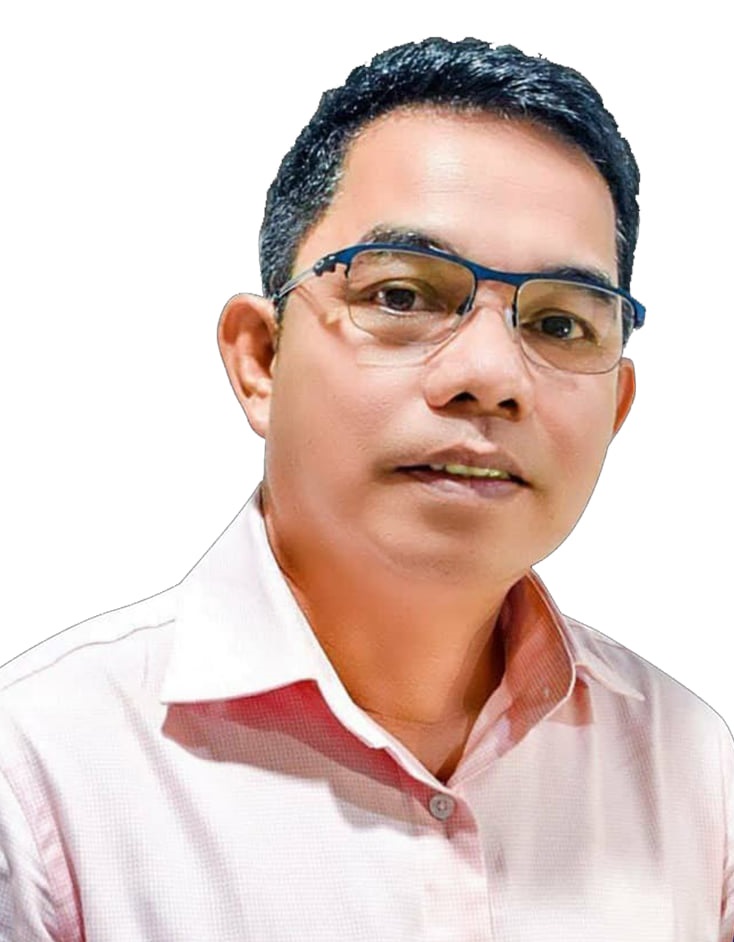
Usec. Wilfredo E. Cabral, PhD

Towards A Robust Ecosystem For Transformative Education

Good morning everyone. Allow me to share my screen for this presentation and the topic that I am about to discuss this morning is more on the fundamental question on how basic education can answer us to the future and how we collected [this] education as a vehicle that allows our learners to see things differently from the perspective of self and the environment. And before I proceed I’d like to of course say hello and thanks to my mentor, Dr. Fe Hidalgo and all of those who are attending virtually for taking part in this activity. As you know, the discussion that I am going to have this morning is actually inspired by one of the many books that I used to read and that has something to do with Future Wise education. So as I mentioned, how do we really answer everyone, our learners, to the future. And we believe that critical to this is a robust and a balanced ecosystem that will yield transformative education. You know for a fact that literature provides vast and extensive knowledge base what transformative education is. But co-creating ecosystem that supports it is one thing that we need to discover through a journey of like-minded people pushing for life-worthy learning for all learners. And given the context, the quantitative judgment of what life-worthy learning is difficult to define. Life-worthy, as Perkins puts it, is something that is likely to matter in the lives that they are likely to live. That mouthful and too broad and even the author said that it is very hard to offer a long list of those life-worthy learning. And to determine what is the bundle of knowledge that can be learned and may have an impact in their future lives is even more challenging in as such based on further articulation and elaboration. Though, we say that education needs to respond as the fast-changing world requires education beyond the basics. So we are actually in the VUCA world and it demands prohibition of education that is focused more of the unknown, much of the known. This is characterized by volatility, uncertainty, complexity and ambiguity in such that the vision of education is anchored in best guesses of what is likely to happen and foregrounded on flexible knowledge likely to inform whatever does happen. And again Perkins boldly say that educating for the unknown can be an alluring and inspiring agenda as it fosters curiosity, enlightenment, empowerment and responsibility in a complex and dynamic world. It favors a broad and visionary reach for meaningful learning. But we are now well beyond the VUCA (Volatility, Uncertainty, Ambiguity) world in that the significance of knowledge learning schools to the demands of the professions and workplaces where the meaning of the term functioning effectively has shifted profoundly in the job markets. As such, the DVUCAD (Disruption, Volatility, Uncertainty, Ambiguity, Diversity) world showed that at the front that’s overshadowing everything is disruption. And whether it is in the form of technology, social change, industry, re-configuration or the like and we are about to continue to experience volatility, uncertainty, complexity and ambiguity, and added to that is diversity. And that includes gender balance, cross-cultural and intergenerational diversity. So in the face of this deep and widespread change that are transforming our world in disrupting the institutional status quo in many sectors such as climate change, pandemic and advances in artificial intelligence, to name a few. These things pose fundamental challenges to both the goals and methods of education and these challenges throws up challenging questions. What knowledge, skills, attitudes and values of today’s learners need to thrive or what they need to thrive in and shape their world and how can institutional system develop this knowledge skills, attitudes and values effectively? We say that technology and society are heavily connected and faster changes in technology often translate to changes in the society. Moreover than not, it translates to greater unpredictability in the form of the DVUCAD world. As you see in the figure, the exponential progress of computing power from 1900s to 2013 with projection in 2025 which is just four years from now as Gordon Moore observed that computing power was doubling approximately every two years, a pattern that remains consistent to this day. And from this figure, we can see that by 2025, an artificial intelligence is projected to parallel the processing capacity of human brain, and if this trend continues well beyond each year, making more progress than the year than it did before. And, so therefore, this has something to do with what again Perkins, in his book Future Wise, made mention about the small word paradox. He said that the recent phenomenon of buzzing connectivity in today’s world make the world smaller but worlds we individually engage become more numerous and complex, the world of online and digital lives, the worlds of entertainment and media, e-books, e-travel, conferences, etc. And with these developments the hierarchical arrangement and organization of what is deemed to be important or what is deemed important to teach may not really mirror the reality of today. Instead, we need to look at curriculum, view the curriculum as a network where disciplines are developed in an interdisciplinary relationship with one another and this makes curriculum richly connected to the life and world problems and opportunities as 21st century skills inform the learning process. This is further highlighted in the goal for, of the Sustainable Development Goals (SDG) of the United Nations to ensure inclusive and equitable quality education and promote lifelong learning opportunities for all. With this goal which states that by 2030, ensure that all learners acquired the knowledge and skills needed to promote sustainable development including among others through education for sustainable and sustainable lifestyles, human rights, gender equality, promotion of a culture of peace and non-violence, global citizenships and appreciation of cultural diversity and of culture’s contribution to sustainable development. By stating that all learners must acquire knowledge and skills needed to live sustainably, Target 4.7 calls for a transformative change in education throughout the world. In that the inclusion of a goal and target of this nature in the SDGs was even foreshadowed in the 2012 when UN Secretary General Ban Ki-moon launched in the Global Education First Initiative and he said “It is not enough for education to produce individuals who can read, write and count. Education must be transformative and bring shared values to life, helping people to forge more just, peaceful, tolerant and inclusive societies. It must give people understanding, skills and values they need to cooperate in resolving the interconnected challenges of the 21st century.” Target 4.7 of the SDG is the key to achieving agenda 2030. Transformative education equips us to better respond to the global challenges and help accept us on the path towards a sustainable and resilient recovery. But how is transformative education different? So in 2011, Springer showed that this table describes the depth of a learning experience in which the first order of learning aims to increase efficiency, knowledge and making the learner realize how to do things better. The second order of learning goes so deep as to recognize the paradigm we are living in and it intends to examine assumptions and to put it bluntly do better things. And learning in the third order which goes by the name of Epistemic Learning is concerned with the acquisition of knowledge itself and aspires to help the learners to see things differently and is the type of learning that is transformative and consequently leads to a paradigm change. And what are the key elements in order of us to achieve transformative education? The future learning ecosystem reflects a transformation away from the disconnected episodic experiences and towards a curated continuum of lifelong learning tailored to individuals and delivered across diverse locations, media and period of time. This will pivot our systems and society to make a way from formal detached education and training towards experiential, personalized and interconnected journeys. So what are the critical areas within which we look at the transformation? So, an integrated technologically enabled learning architecture that unlocks the anticipated transformation in learning. Technology amplifies both good and bad teaching but we must not lose sight of the fact that quality teaching is and will remain the center of the learning process. Learning designers will need to understand how to apply diverse technologies, blend disparate delivery of modalities into holistic experiences, build-in and apply learning analytics, balanced and practical and collective across the diverse communities who actively contribute to the realization of transformative education. As to the commitment, achievement of the future learning ecosystems requires collective coordination across diverse communities of all stakeholders who actively contribute to the realization of that we call transformative education. The governance, in terms of governance, the governance bodies along with actual government, key performers within the ecosystem will inform policies for the future learning ecosystems. And in terms of policy, the future learning ecosystem will affect us all and in turn we can each shape and contribute to it. So these are the six critical areas and all of this must align. And we say that learning is a journey and not a destination. So to attain an effective human infrastructure we say that partnership is the answer because we need to build the network of like-minded people so that the transformative or the creation of transformative education it requires a very close cooperation between schools, the industry and authorities. That is the starting point. However, it is not enough. We also need these networks of like-minded people, the clusters were start-ups and teachers, researchers and educators from basic education to higher education as well as vocational education, the parents, business leaders, artists, learners who can experiment with new ways of learning and new ways of teaching. And of course, we need leadership from policy makers. In that report from the 2015 global education industry summit, we need also the following to develop the powerful, purposeful networks that connect the right people and the right organization. So we need advancements in technology to create connectivity and access across the globe. We need powerful and less expensive devices, interoperability standards, APIs, single sign-ons platforms and more. These are technical and engineering solutions. We need researchers, neuroscientists and cognitive scientists and other fields of study to improve our understanding of how people learn and we need to support for research development, product testing, methods and protocols, learning analytics and data mining. We need entrepreneurs and designers and start-ups to create and pursue solutions to challenges both grand and small. We also need teachers and teacher teams to provide deep insights into pedagogy the best ways to manage group of students the methods of engagement and motivation, ways to engage students with relevant and powerful problem solving; the teachers design the curriculum, new assignments and share insights into evolving pedagogy. We need government and policy makers to ensure laws, regulations and policies that keep our rights on the public good, ensure safety and security and promote rather than hinder innovation. So, we need to think together in order to shape the future that we want. And we want to achieve education that heals, repairs, repurposes and renews. So these are the things that we need. We look at having that ecosystem that really works to transform the kind of education that we need. With all of that, I’d like to say thank you for listening.

AAIG 2021 Summit Transcript – Dr. Jamie Metzl

Jamie Metzl, PhD

Thank you so much. It’s really my tremendous pleasure to be here with all of you, kinda here, virtually here.  Philippines is a country that’s very dear to my heart. And the topic that we’re discussing here today, the transformation of education is absolutely at the very, very core of building a safer and better future for everyone. As what’s just mentioned, I’m the founder and chair of One Shared World. We are a global movement of people all around the world, and Dean Henry Tenedero and the amazing friends in our One Shared World Philippine chapter are teaching us things everyday about how we can come together to address not just the many challenges we face which are very clear, but the great opportunities that these amazing transformations in our communications and other technologies afford us. So thank you so much for inviting me to join you, and inviting me to join you to talk about something that’s so important as the transformation of education. Because what is education at its core, but the realization of our potential, of our potential as individuals, as communities and as humans. As was mentioned, I’m the author of the book, Hacking Darwin: Genetic Engineering and the Future of Humanity. I’m a member of World Health Organization, expert committee on human genome editing. And there is no doubt that as we unlock the secrets of genetic code, we are learning more and more about how much of our identity is coded in our genetics. And that’s certainly is true. But it is also true that our lives are in many ways far more determined by our cultural inheritance than even by our genetic inheritance. Our biology is fundamentally similar to the biology of our ancestors tens or hundreds of thousands of years ago. But our lives are radically and dramatically different not because of our biology but because of our cultural inheritance. And we need to recognize that cultural inheritance is something that is very precious. And the way that we maintain it, the way that we grow it, is generation upon generation building our foundation of knowledge and then doing everything we can, both to pass that knowledge to future generation. And to give those generations the tool that they require and will be able to use to grow the foundation of that education even further. That’s why your work is so important. That’s why our mission together here is so important. And I want to put this moment in history in some contexts. Just a hundred years ago there were about 2 billion people alive on earth with only a 20% literacy rate. That means about 400 million people have had the opportunity to participate in many ways, in the world of shared knowledge, at least shared beyond our smallest community. Today we’re approaching 8 billion people with an 85% literacy rate, that means around 6 and a half billion people have access to the world of shared knowledge. And because we are all networked, it means that nobody has to solve a problem that’s already been solved. Our ancestors living in different parts of the world had access to different technologies. Some of the era-defining technologies like a copper, like iron. The difference was thousands of years across civilization. And that meant for thousands of years, people in various parts of the world where solving problems that have already been solved at some other time in some other place. Today, because we have so many people and because we have network knowledge systems, everybody gets to wake up and solve a problem that has not yet been solved. And our technologies are allowing us to enter an era of super convergence. It’s not just that we have this massive computing power, as what’s shown in the slide of the previous speaker, it state our computer revolution is unlocking a machine learning, an AI revolution , and that is unleashing a genetics and biotechnology revolution. And with the tools of that revolution we are learning about the designs of nature that are circling back in helping us create new models of computer chips and everything is it goes around and around. So this super convergence of technologies is accelerating the rate of change. And that means that in a world of exponential change when we look to historical experience to understand how quickly things are changing and will change, we are actually too conservative. Our brains give us too conservative information. And so to understand where we’re heading, we are all in many ways need to think like futurist, we need to think like science fiction writers. And this moment creates tremendous opportunities; it creates tremendous opportunities to solve problems that have never been solved before. The new MRNA vaccines that more and more people around the world are accessing are our case in point. It took only 48 hours from when the sequence genome of the SARS Covid2 virus was made available to when the formula was sent out, was created through a computer-generated model by Moderna that is exactly the same as the formula of the Moderna MRNA vaccine. It was based on 30 years of work, but again it was based on the super converging technologies that made that possible. And we are going to see those kinds of miraculous changes. And if we have the right values, these technologies have the potential to help everybody, everybody all around the world unlock and unleash our greatest potential because per we as human that is what we have. And it’s an incredibly exciting moment to be alive. But it is also an incredibly frightening moment to be alive because these technologies are allowing humans to do harm at scale. We’re about to have the Glasgow COP26 [UN Climate Change Conference of the Parties] meetings where we’ll going to be discussing the challenges of climate change. And right now it’s very clear that humans are driving climate change but humans don’t have an answer to the climate change that we are driving. Right now we live in a world where there’s a pandemic that has killed depending on what numbers you accept, but according to the economists,  15 million people are dead unnecessarily. And so as you may know it’s my belief that there’s a very real possibility that this pandemic stems from an accidental lab incident in Wuhan where Chinese scientists, if this is the case, were actually trying to develop vaccines and treatments for exactly this kind of experience that has been unleashed. Across the board we see many examples of human problems going to scale because our reach and power of humans has reached a global level. That is the story of climate change, that’s the story of a potentially pandemics particularly in the age of synthetic biology, that’s the story of proliferating nuclear weapons. And one of the reasons why I and we created One Shared World is that with these increasing powers we need to recognize that human beings face an existential threat. And that threat is founded is based on our global collective action problem. This is what i said in the earliest days of the pandemic last year. That if we solve the Covid-19 pandemic but don’t solve the broader issue of pandemics, we’ll get through this and then we’ll have the next pandemic and the next one, and again in the age of  synthetic biology, these pandemics have the potential to be far more dangerous and deadly than this one. But if we solve the broad issue of pandemics but don’t solve climate change, we will be jumping out of the frying pan and literary into the fire, with ecosystem collapses in our oceans and elsewhere. And even if we should rally and solve climate change, we don’t address other global existential issues like proliferating nuclear weapons, what difference does it make if we protect our climate if we end of wiping ourselves out through nuclear war. And the core through-line here is this mismatch between our global collective problems which are a greatest problem and our inability to solve or address that same category of global collective action problems. And that’s why we together One Shared World as was mentioned people in 120 countries are coming together to demand that our leaders do a better job of balancing our narrow interests as citizens, as corporation, as countries with our broader interests as humans sharing the same planet. And that brings me back to this issue, the core issue of education because the only way that we are going to solve these problems is with empowered global publics around the world. And the only way those publics can be empowered is if we have highly functioning educational system that give people the tools not just to learn, which is critically important, but to learn, to engage, to be citizens of their countries, to the informed citizens of the world. Because this rate of change is happening so rapidly, the only skill worth learning is how to learn, how to be wise, how to apply our most cherished values to our greatest challenges, how to apply our most sacred values to guide the application of our increasingly god-like technology. And that’s why the work that you all are doing is so critically important. Yes we have a genetic future; yes we have all kinds of ways, that we’re just spoiling the planet making all kinds of problems that at times seem insurmountable. But our greatest asset is our young people, and their greatest asset is their mind. So I applaud you for the critically important work that you are doing to unlock the greatest power in the universe which is the power of the creativity of young people and all humans. Thank you so much and let me stop there.

AAIG 2021 Summit Transcript- Rev. Fr. Jesus M. Miranda, Jr.

Rev. Fr. Jesus M. Miranda, Jr., OP, PhD

Thank you, thanks to that kind introduction Mam Nanette Fernandez. And of course thank you to the organizer of this 2021 summit by the UST Alumni Association headed by Dr. Evelyn Songco and its vice president Dr. Ida Tionko maraming salamat po for inviting me. And of course to our Dean at the Graduate School, Dr. Michael Vasco, and of course the UST CCPED Director Mam Jocelyn Agcaoili, and to my fellow resource speakers, good morning po sa inyo. And, of course, to all our webinar participants, good morning. And I think among speakers I think I’m the only one who is not directly involved with the industry but instead directly involved with the academe as a Faculty of the Graduate School. I would like to share with you some slides, okay, as I discuss some thoughts about this topic. Just to give a rationale of my discussion, I think there’s really an undeniably an interaction and a close collaboration if we want our society and we want our country to progress and of course to help all citizens to have a good life and all this. Because there is no one sector in our society that can help us in improving our lives. And so the academe, the industry and government should work together in order to provide this, what we may call strength. That’s why in one of my columns in Manila Times, I think that was 4 years ago or 3 years ago I’ve already mentioned this, that all three sectors should be working together. That’s why we have to break all forms of barriers that divide the education sector, the government and industry. And then I mentioned something also about the centralized knowledge productivity and the vanishing peripheries. Just like a reality check, schools are not any more the center of gravity when it comes to knowledge productivity, and I think you have heard about what they call these corporate universities, even one mentioned about your competitor is not anymore the next university in town or in the city. Our competitor now is Google because we are not anymore the center of productivity of knowledge even if we do research. But instead there are many institutions now who just like educational institutions, they are also producing knowledge. Just reading a fortune magazine, they featured one time Merck’s Pharmaceutical and they were displaying the laboratories for their training scientists. In their institution itself, at Merck’s drugs and pharmaceutical company, wherein their laboratories would even match the high-tech laboratories of Harvard and Stanford. Why? Because they really invest in that and they train their people. They don’t have to always depend on universities to provide them talents and knowledge. I think we have to be aware of that and that’s why we need to do better as higher educational institution in order to be able to respond to the needs of the Industry 4.0 and still become relevant as educational institutions. And then I have written something about the internationalization preparedness. Nowadays we always say, you know this school, we always make it a slogan we are one of the excellent schools or we are excellent. I think word excellence is the much abused word nowadays and the most butchered word. But you know I think you cannot say that you are excelling and you have level of excellence if you cannot compete internationally. That’s why you are the barometer or what we may call the measurement of success, and excellence is not something that can only be found locally but you should be ready to go out because the world has become small because of globalization. So I think those are the things that I can say about the need for close collaboration between academe, industry and the government. Now there’s a plethora of literature that speaks about the fourth industrial revolution and education. What I could suggest is at least get a hold of this three literature: the Higher Education in the Year of the Fourth Industrial Revolution by Nancy Gleason, or the one of Armand Doucet where he serves as the editor of Teaching in the Fourth Industrial Revolution, and of course a very foundational literature in understanding The Fourth Industrial Revolution is Klaus Schwab of the world economic forum. Okay at least I have mentioned to you some literature that you can hold on to in order to have a wider and deeper understanding of this Industry 4.0 that is influencing all of us now. And so I’ve divided this sharing into two parts. First, where are we, as you know, as people being influenced by this Industry 4.0 and then later on to answer directly the question how do higher education or institutions of higher learning should behave should the structure should remodel themselves in order to be able to respond to the demands of this Industry 4.0. But first, where are we now being influenced by this Industry 4.0? And I think all of you might, would agree that we live in an accelerated speed of change and I think the Industry 4.0 is very influential on this. First in technology, in information, knowledge and skills, from time to time with  just short while our gadgets would need to progress or would need to be changed in order to have the latest model, the latest technology in order to help us in our studies or in our work. And always remember that in our time there is already a short shelf life of knowledge and skills. Kung baga sa pagkain, ang knowledge mo at skills kung pagkain yan napapanis kaagad. Why? Because every now and then there would always be a new knowledge that would come out and then new skills that you need in order to be able to survive or you need to be able to thrive in a work where you are situated. Mabilis ang pagbabago, mabilis magbago ang mga bagay bagay, especially knowledge and skills. And I think most of you would agree on that. The world has become fast and it’s been moving fast and this is part of the impact that the Industry 4.0 has on us. And then if there is an accelerated speed of change then what kind of characteristics that you must have in this 4.0 industry. We are asked to be more flexible, adaptable, you should be fast learner and be able to sustain being an adult learner and also give emphasis on being a lifelong learner. As they say if the other universities or other institutions that produces knowledge, most likely they have same strategies with you. Most likely they have the same number of talented people; it’s like what you have. And so what’s your advantage? The only advantage you have is how fast can you learn? If the rate of learning is greater than or faster than the rate of change, most likely you would try, most likely you would succeed, most likely you would accept, and most likely you would lead. That’s why something to reflect on, how flexible are we, how adaptable are we, are you a fast learner and are you able to sustain being adult learner or lifelong learner. Soon in the discussion I would mention this. Because things move fast, because knowledge moves fast and they can change fast, then we need always to learn and relearn in order to be able to go along with the flow brought about by the impact of Industry 4.0. Borrowing this thought from the CEO of OMRON Asia, he says we are moving from this current society to autonomous society and what is that from being a centralized to distributed. And I think even in [the] financial field as something that you have heard, like blockchain. And you know that financing model, wherein as they say in blockchain, it’s not anymore depending on the central office but a decentralized banks or institutions wherein they decide on their own about the finances they do on you if you apply for business. And then we are moving from real to digital and I think much of us have experienced this in teaching. And then there is from controlled to autonomous, and then from linear to circular. That’s why I think the main thing that we need to take into consideration here is that, are you learning enough, are you learning fast in order to be able to get the data that you need for your decision making, because the decision you will be making it will not anymore depend on the central office or a central institution but instead you are given much authority now and much autonomy to decide on your own. Are you taking advantage, for example, of the data that you can gather, are you taking advantage of the skill that you need to learn or that you have already learned because sooner or later you are left on your own to decide. You are left on your own to put direction on your branch or on your institution as asked by your higher authority. Okay I think that’s one of the situations where we are. Around four years or five years ago, the University of California and Berkeley made a study research as regards to the initial impact of the Industry 4.0. And in the research, these are the items that came out. They said there is a transformation of the workplace into an era of tech disruption. And what are these? They say this time we are already having liquid workforce, employees able to retrain to stay digitally relevant. If there are companies before or organizations before, or institutions that have been hiring for life I think that’s something that they need to rethink. Why, because people now have many options. Nobody stays too long in one organization or in one institution. With so many options, how are you going to make your employee especially the talented ones stay? And then how are you going, on the other hand, you as an employee, how are you going to manage to be able to stay afloat and move from one institution to the next especially if you continue to upgrade yourself, re-skill yourself with the things that you need to learn. And then it says that Hollywood model, hiring practices, project-based work style, much of the work now are only project based. That’s why maybe they call it Hollywood model. And then there is integrated talent management, workforce planning, encompasses all types of talent, and permanent and contingent alike. And then there’s a greater flexible working options to attract mobile talent. Much of the work now, I think we have experience here, much of the work now is something that we cannot anymore find in the office but instead you can find it anywhere as long as you submit and comply with what is being asked from you especially if you are in a way very much trained on a digital platform. You can work anywhere, and I think that’s what employees are looking for. Are they given a flexible time, are they given a chance to be flexible in their working situation and all this. And then there’s skills agility as automation pervades workplace. And then training women and other workers, so they have more tech skills. And then there’s another point here that the research had pointed out: what employers and students want? University credentials that are more modular, industry-aligned, experiential, digital and I think that’s where we need to answer that question. What are we doing as educational institutions, providing for our alumni, for our students, so that the industry would find them to be attractive? Are we still providing a curriculum that is very much relevant, it is already industry aligned and I think that’s why we see the importance of this collaboration between academe and industry and even government. The standard university degrees, but also micro-masters and nano-degrees, if you try to look at it we are moving away from that too structured program that higher educational institutions are providing. Can you provide a micro-masters or nano-degrees, lifelong learning to keep skills up to date with the fast-changing knowledge that we have in skills. I think we need to relearn and relearn. Evidence of engagement in world of work such as project outcomes. Graduate degrees for a number of jobs and what kind of skills students want to be hired with a gig economy and technology. Employers prioritize skills over geography. And you see from these points that came up from the research you see there is a change of paradigm, there’s change of even framework on how employees now see themselves and how employers should address these needs. And I think these are, as the research says, these came about because of the impact of the Industry 4.0, but how ready are we as an educational institution in providing the skills that are needed by our students to address the situation. That’s why reviewing that, a book by Klaus Schwab on what industrial revolution, I have mentioned that in my column that IQ is good but EQ is better.  We have to understand that the industry 4.0 is not only about the advancement of technology as Klaus Schwab mentioned, it is all about, instead, making humans at the center of the situation. Technology is just a means not an end in itself. But instead technology should be there in order to serve humanity. And so what is needed is still much collaboration among humans, among people. They should still learn how to empathize; they should build up, and in a way, make sure that they are having a good relationship with one another. Because technology could really, in a way, help advance society if humans are not in a way having a good relationship with one another. And so even if we need IQ, EQ now is the one being given emphasis on. And then another thing is that we have to be ready to go with disruption rather than evolution. There are things that evolve, we see them slowly changing but there are things that we wake up in the morning, they’re just there. For example the platforms that we all now using or we are all involved in. One day you wake up and then there is UBER, and then there is GRAB, and then there is AIRBNB. How did that, did they not evolve? I don’t think they evolved. Just one day, you just discovered that they are there they are already the most popular in a way partners that we have in our business, the platforms that operate through courseware and all this. And another thing is simplicity may be a virtue but complexity now is a necessity. If you think you still live in a very simple life, maybe you belong to the last century, because the world now has become very complex. Now if you find your surroundings to be complex, in your workplace to be complex, then most likely you live in our time because the world has become complex, and you have to be at home with complexity. I mean those are just some of the points that I’m reflecting on the impact of this Industry 4.0 and how we should address it. And so the main question now is how can we design then an education that equips learners with the knowledge and skills to thrive in this transforming world due to the impact of Industry 4.0? Or how should educational institutions of higher learning respond to these needs? And I have some points to share with you. First on the curriculum, and I mentioned here substantial change to the science and technologies curriculum is a must. Now try to see as I give an example how near or how far are you as a head of an educational institution in doing this especially if you are in the tertiary level or graduate level. The curriculum, it says curriculum remodeling, restructuring is a must so that students can develop capacity in the rapidly emerging areas of genomics, data science, artificial intelligence, robotics and nano materials. And as it says here, the 4th industrial revolution STEM curriculum would reconsider the curriculum within the traditional primary sciences that is the traditional thing that we have subjects, like biology, chemistry, and physics. Can it be a place, a higher premium for training in computer science subjects, a support for IR literacy? And I’m just reading this now, what came to my mind is what Mr. Leo Riingen of Informatics just mentioned a while ago, it’s a sad state that we need to catch up in our digital competitiveness and it says here we need to level up our knowledge on computer and digitalization. And then there’s an example here, try to see within biology, new approaches might include training within introductory courses to discuss emerging areas such as synthetic biology and molecular design. Do we have this now in our curriculum in science? Another example, new course in engineering biology that allows students to design their own life forms on computers and bio print them to solve practical problems in medicine, public health and environmental management. And then trying to see the example, a Stanford curriculum, it says here there is a new major known as bioengineering which trains students at the interface of life sciences and engineering and merges expertise and resources in the departments of medicine biology, and engineering. And now you see the interrelatedness and the interdisciplinary move in learning. And then another example that I can show you is, similar innovations within chemistry, including worldwide proliferation of courses degree programs in green chemistry which blends chemistry, biology and environmental science to allow students to engage on real environmental problems such as synthetic fuels, bioplastics, toxicology, and to train students in technique to reduce pollution. And then another example, a new physics curriculum emphasizing 4IR collaborative skills can also be developed based on projects where students design and build original musical instruments, cryptographic gadgets and other inventions collaboratively. Are we near that or are our curriculum near those things that are being developed now especially by these schools who see themselves to be advancing and responding to this impact of fourth industrial revolution. And then another example, an additional educational response for IR might require a restructuring of institutions to provide new science programs and departments in emerging interdisciplinary fields to more efficiently provide trained workers to help advance and accelerate the development of ever more sophisticated biotech, nanotech materials and AI. And then an educational plan for the 4th IR must be built upon the emerging development of hybrid online and in person instruction and efficient and seamless integration of global video conferencing and wide array of asynchronous educational resources. You see they have already thought of this even before we experienced pandemic. Now we have all this virtual classroom but even before we had these online classes they have already put this into mind about this blended approach to teaching and learning using technology of course. And then the blended instruction and optimization of flip and online courses mentioned by Mr. Leo Riingen a while ago of Informatics, this flip and online courses will make more efficient learning environments that can adapt for diversity in preparation of students and that means building on from the contribution of the third industrial revolution. So not everything that we have nowadays should only be focused on the 4th industrial revolution but much of the things that we can still use are those practices and the technology we had from the previous industrial revolution. And so what teaching and learning approaches and spaces do we need if this is the case? Try to check on these points and try to see how serious are we in giving emphasis on this. First the multi-disciplinary approach to teaching and learning especially with the disciplines that we have, biology, chemistry, math and all this history and all this. So we need to break down the stylus now of discipline because much universities now are moving into the interdisciplinary approach to teaching and learning.  And then there is a Self Organizing Learning Environment. Are we giving emphasis on this, do we see this to be important, Self Organizing Learning Environment, because SOLE, short for Self Organizing Learning Environment, gives emphasis on self-directed learning. Some would call it pedagogy but then I think this is something that is important to us now especially that much of the time we are online. How could or how much space do we give to students so that they can have self-managed learning. And I think that is connected with the third one, the metal learning or meta-cognition, self-directed learning and thinking. Do we give much emphasis more in our classrooms or in our schools or in our digital or virtual classroom? Collaborative learning. Problem-based learning, how serious are we in providing them problem-based learning? And then how serious are we providing experiential learning to students? So these are summed up in a general form but I think something we need to reflect on. Are we already learner centered or are we still focused on being teacher centered? And then do we acquire and utilize deep skills, do we provide it for our students? And then again here is again a question of to build strong digital capabilities. Kaya nga sabi kanina, digital competitiveness is something that we need to level up among the students here in the Philippines, strong digital capabilities. And then another demand that is asked from us is to train and to teach our students who have cognitive flexibility and the interdisciplinary understanding of complex problems. And then another point that we need to harness and to have more is boot camps for learning. Some professors in tertiary and graduate level would say that this is the antithesis to higher education. Why? Because in higher education because of too much formality and structure you need to wait for one semester or two semesters in order to reskill yourselves. But in boot camps, just have a few weeks and then you can level up your knowledge and the much needed skills that you’re looking for. So those are the things that I have raised. How near are we doing this or how far are we doing this as practitioners or professors or administrators in institutions of higher learning. Now I think we will get it all wrong, [I’m down to my I think last three slides] we will get it all wrong if we think that the Industry 4.0 is just about technical or technological advancement. I think what is also being given emphasis is not only the advancement of technology and all these things that are related to it, like internet of things, artificial intelligence. But instead it’s also a time for the higher education institution to see the new role of liberal arts and humanities because as I mentioned at the center of this fourth industrial revolution, it’s not only technology but still man, but still the humanity. And so do we find or are we prepared to reformulate and to remodel in our educational institution the new role of liberal arts and the humanities. Because the liberal arts and the humanities are supposed to articulate the following: what it means to be human in the fourth industrial revolution as the revolution brings new conditions. There are new conditions now before we always relate with each other physically, personally. But now we relate with each other, as the new condition gives us, virtually. Now we got new spaces, how can this be deepened, how can we find meaning in it and how could that be articulated. And I think it’s the humanities and it is the discipline in the liberal arts that would help us find meaning and deepen our understanding of a new situation of humanity where it much is assisted by technology. I’d like to cite these wonderful words, on thought of Peter Jandric, from his article From Anthropocentric Humanism to Critical Humanism in Digital Education,  “This is the shift of teaching approach from anthropocentric humanism to critical post-humanism,” and it says, “this shift of approaches stresses that digital education is more than a purely technical concern, an online environment change the dynamics of space and time to create new learning cultures that challenge our earlier notions of social interactions and enable new perspectives on our shared humanity independent of geographic boundaries.” So that’s Peter Jandric. That’s why maybe sociologically, because of technology, before we can form communities by reaching out to people physiologically, physically in the real time and then we see each other in person, but this time can we say a community that is a virtual, right? There are virtual communities, how would this and how would sociology, in a way, help us define that. Or in education can we say that what we are doing now is really the function and also the role of school when we are only having virtual education or virtual learning, online teaching and learning. There is a new relationship now by teachers and students that is mediated by technology. Who can deepen that understanding? Who can give a new definition of that relationship? And I think that’s the role of the humanities and the social sciences to help us have a higher or deeper understanding and a wider understanding and a new understanding of these new spaces and relationships that we have. In history for example, what new narratives do historians have to write with this Industry 4.0 affecting us as society, as a group of people, as a nation. And I think those are just some examples wherein we can find the humanities and liberal arts having a new approach in understanding humanity being influenced by the industry 4.0. And then take a look at number three, the role of liberal arts and humanities strengthen and sustain the social and cultural fabric of people. We don’t forget the culture of people, especially the ethnicity of people, especially the place where they are, their history and their social relationship with one another because at the center of this Industry 4.0 is still the humans. Technology is just there to be a tool. And then number four it says there, guide the moral and ethical thinking on the use of technological advancement and I think this is very very important. Why? We need morals; we need ethical principles that involve digital, biological and physical interrelatedness in humans. So how do you find this relationship among people who are only meeting and doing in a way or having relationship only virtually? How could they be governed by ethical principles or moral principles? And then lastly, it says that the role of liberal arts and humanities in Industry 4.0 is to articulate the political effects of the convergence of the physical, I mentioned this, digital and biological world. What kind of laws that need to be formulated? What are the policies that we need? What kind of norms should be given emphasis on? And I think these are all things that can be articulated by humanities through the help of the liberal arts. So in a way you know as though try to balance things the Industry 4.0, as higher educational institutions should look at it, it’s not just giving attention to technology but instead we should also see how the liberal arts and the humanities find their role in this reality that we have now being influenced by Industry 4.0. And I think that ends my presentation and then there’s a few words, Mr. Leo Riingen mentioned a while ago that this pandemic is an opportunity for us to remodel our educational approaches. And I keep on saying it, I think I’ve also written in one in my of my column when I said that if there is one thing that this pandemic had taught us and you know what is that, it has made us realize that there are many pathways towards learning. And personally I’m always an advocate of moving away of too much structure and too much formality in teaching and learning because if we give so much focus on that, much of the time what we are doing is just a compliance and not a real joy of teaching and learning. So with that, thank you very much.

AAIG 2021 Summit Transcript – Leonardo A. Riingen

Leonardo A. Riingen, MBA

Education In The New Normal

Hi, good morning to everyone. Thank you to all the audience right now. I think it’s a whole morning and I know it’s kind of difficult to be in Zoom for a long time but please indulge me and I hope I can share with you my insights on education after I prepared just a few slides, let’s give it 15 minutes so I hope I can compress it. I think Ma’am Yoli and my tukayo Dr. Leo were able to provide you with their insights. I think Ma’am Yoli talked about technologies in Globe which I’m going to touch on probably briefly here. And of course one of the most important parts of the equation would be the people side. And today I’m going to share with you my experience as an educator. I’m basically an entrepreneur and natisod lang ako sa education when Informatics Singapore wanted a partner here in the Philippines. That was way back in 1994 when IT literacy was just around 7%. So I was convinced that the way to go is really to IT and I’d like to help also the Philippines to achieve a higher literacy rate. And I’m happy to say that I think together all the technology companies and of course the Pinoy’s propensity to do social media, our IT literacy rate in the Philippines has gone double digit now, probably even reaching more than 70 percent. So with that let me share with you my screen. Now I’ll talk about education in the new normal. Well as what Ma’am Nanette said, I was a graduate of the UST High and at this point I’d like to thank Ma’am Nanette, she was my English teacher. I hope I do justice to your teaching Ma’am Nanette. Well this is actually the dreaded day, last year. Because when we got to know that the government locked down the country, that was March 16, it would have a big impact on education and specifically not only on our food business, because we also own a couple of restaurants, but basically our education business, in this case Informatics. And on April 22, 2020 we saw this cover of Philippine Star, it says that instead of around June, it would be August for schools and there would be no face to face. So that was kind of difficult for us because we don’t know whether this Covid pandemic would extend. And there were there were three options that we were deciding. First is just to wait it out, we’re hoping at the time that I think everyone hope that the lock down will just be for a month or two months. The second option is to close because I’ve seen a lot of schools deciding to close because there were no enrollments. And the third one is really to, which a bit difficult, is to act and adapt. So the great dilemma for everyone is do we prioritize health or do we prioritize education. I think this is the dilemma also parents and also the government. And true enough until now and until this year, a lot of thinking are going into education whether to open or not open face to face. That’s a great dilemma. Now I’m going to share with you my experience as an educator hoping that I can share with you some of the insights that went. Obviously, we took the third option which is to act and adapt. We have nine colleges and all these nine colleges are empty, and they’re all over the country. We’re paying rent, we’re paying lecturers, so the cost of course would be very staggering with zero revenues considering that there’s a big question mark whether students would enroll in an online platform. But nonetheless, I always believe in technology, and I think it’s about time, during the time of course last year, education is not actually online. I think people actually hated online learning. It’s only last year that parents were forced actually to adapt to online mode. Otherwise the kids won’t be able to learn. So I found it as an opportunity actually to revolutionize education and the only way to do that is actually to help the country by coming up with solutions. And in this case it’s really EdTech. I think a decade ago, we were revolutionized with e-banking. I remember before there was a struggle whether to bank face-to-face, meaning with the teller or go ATM, and later on mobile banking. And when I looked at it, that was after the natural trend. Technology is here and industries would be adopting technology. Same thing with commerce, we now have e-commerce, and before nobody had ever thought of doing groceries online. But the pandemic forced them actually to order online and even get food deliveries online. So maybe education can now catch up. In fact I was kidding that kung sino pa yung may “E”,  like education, yun pa yung hindi electronic. So now is the right time actually to capitalize on and look at this pandemic as an opportunity to revolutionize and to change and put innovation into education.  EdTech is actually the process of integrating technology. It’s basically not replacing teachers, which I think a lot of us fear as educators, but still to build better experiences in teaching and learning, and hoping that the outcomes will be much better. There are a lot of EdTech available, and if you notice I think a lot of schools including UST adopted already these technologies.

I’m going to just to share with you our experience with some of this EdTech I’m gonna talk about a few bits about e-learning, LMS, VAL, learning analytics, gamification, social media. I won’t touch on the right side, it which would require another session. Now I also want to note, Ma’am Yoli talked about STEM a while ago. Actually, one of the technologies are available right now is the incorporation of Art into STEM and it’s now called STEAM. And the reason for this is really putting creativity into science, technology and even engineering. Let me talk about e-learning. Obviously e-learning is not actually online learning because a lot of people say kapag e-learning, online. It’s basically education or content being delivered electronically. If for example you were given a USB with some materials in it, given to you, plug it on, it’s called e-learning na rin. But of course in the broad sense of e-learning, this would pertain to online activities and if you would notice e-learning is going towards interactive learning, hindi lang yung nagbabasa ka, hindi lang yung nanonood ka. But there are a lot of e-learning technologies that would allow the student to participate electronically, and a good example of that would be simulators. I think we hear about simulators. And if you want to learn how to fly, and of course if you get to fly a plane you would crash it, so there are flight simulators. And amazingly even driving, in fact a lot of kids right now learn driving through games. So it’s actually e-learning. The nice thing about e-learning is that you actually learn quickly and easily. And the beauty of it, because of connectivity, because of internet, you learn anywhere, anytime, and as they say anyhow. So a lot of stuff were already incorporated in e-learning including podcasts, videos, and these are actually in multi modes ready. And one of the things I’d like to share with you would be two modes being used right now. Natutuwa ako because parents are now talking about synchronous or asynchronous learning. And basically synchronous would be still teachers, students talking to each other, and you have technologies to do that; Zoom, MS Steams and Google Meet. Unfortunately, I’ve observed that a lot of schools said we’re doing e-learning and when I looked at how they do it, it’s basically synchronous. They ask students to log on, listen to the teacher in a practical way, replacing the classroom with a               Zoom meeting or MS Teams. This is just one part of e-learning. I think the reason why parents are having this bad image of online learning is because e-learning was not executed properly. The other mode of e-learning is actually the asynchronous mode which is recorded learning and these are learning content that were utterly developed by educators and delivered online without the need for face-to-face. Now I’ll skip this and probably you can just read the slides. I think at this point everyone in the audience would say e-learning is good. Well yes, in the strictest sense of the word. E-learning is very engaging, it’s interactive, it’s cost efficient, because it’s easier actually to deploy learning to a hundred thousand students, its flexible and also the capacity. By the way, the nice thing about e-learning is that even if your student is an OFW or student would be in other islands of the archipelago, you can still deliver the same learning, the same modality, even if the teacher is actually not in the same location as the student. The last one is scalability and accessibility. So scalability, meaning you can have several schools all over without actually building infrastructure. And lastly accessibility; accessibility meaning if you have internet connection, you have a mobile phone, you have a tablet, you can actually learn.

Now, Informatics actually partnered with Skillsoft and we developed this ION or we call Informatics Online. Skillsoft one of the US biggest online content provider, it’s so big that it has actually 25,000 courses. And if you notice, it can range from simple communication courseware to blockchain, to disruptive technologies, to android development. Amazon Web Services, we partnered with them and they provided us the content and all of these are available to our students right now and for a fraction of the cost of taking individual courses.  So Informatics partnered with Skillsoft and we’re now delivering our online learning in partnership with them. The other thing that we did is to offer this as well to the LG (local government) use and even the government. Informatics and Skillsoft offer this to Taguig and I think we have people from the Taguig and I think the people would know this TECTOC program initiated by the mayor. The objective is really to get the unemployed and the underemployed go into online learning rather than watch the Korean telenovelas and Netflix, and this is a good way actually to spend the quarantine. So right now we have trained around 25,000 Taguigeños. And one of the nice things that happened here is that we were able to spot actually learners who are so active in e-learning because we offer them practically around 4,000 courses online. And there’s this guy in Taguig, who is actually a senior citizen already, who took 800 courses in the span of six months. And there’s another, story there’s this government employee who actually was applying for a job in DOLE, and instead of getting a supervisory position, she got a director position simply because she has six badges or six certifications that she secured from this program, this TECTOC program of Taguig. And again, all of these were made available through Informatics and Skillsoft. The other one, which I’m also proud of, and we did this also with Secretary Ramon Lopez, will be the DTI PET Project. The objective of this is to redevelop digital natives for digital companies. [I think I saw that Secretary Lopez was a speaker in a talk with UST]. And a lot of online companies like Lazada, like Shopee, are actually looking for digital programmers, for people who are very well versed in e-commerce. And DTI partnered with us to offer those digital skills, and right now ten thousand students applied, one thousand students are into the program already, and we have graduated most of them in the program.

Now let’s talk about LMS (Learning Management System). I think the LMS is something which schools really wanted. An LMS of a school provides the platform that handles all aspects of the learning process. So it’s where the content is. There are a lot of LMS providers out there: Brightspace, Canvas, Moodle, Blackboard, and I think UST is using Blackboard right now. Informatics decided to go for Brightspace. But just to illustrate to you, there’s a lot of technologies available. The problem is each of those technologies does not talk to each other. So what the LMS does is actually to unify everything, whether you’re using Google Forms, Google Drive, still doing one of the boards, the LMS actually simplifies and automates all these virtual solutions in simple and virtual manner. I’ll show you this video about an LMS [Video being shown/played]. And the reason why we wanted Brightspace is because it’s used by most of the big universities in the US, even New York Department of Education, West Virginia Department of Education, Singapore Management University, uses it. We’re happy with it because it’s so simple to use. It’s not actually a technology company with education solutions, but actually an education company that use technology to aid teaching and learning.

The other EdTech is Video Assisted Learning. I think most of the teachers are using this now, I know some teachers now are recording themselves. Rather than doing Tiktok dance, probably you can record a lesson. The nice thing about videos, they’re very enriching for students, and for teachers it reduces also the workload, so rewind lang ng rewind kung gusto matuto. Now this is something surprising, I think a lot of educators might hate me for this about social media, but social media is something that you can use in education. Note that the Philippines is actually rank number one in social media. This is the reality right now, even beating Colombia and beating them by 30 minutes (which is 4 hours 15 minutes). And in terms of internet usage, 10 hours of our time or almost 11 hours; and the global average only six hours. This is the latest data, January data. Our adoption to e-commerce in 2021 is now 80.2%. This is something which I’d like to tell the other educators, I think rather than fight technology, you have to live with technology right now and use it. Instagram is actually the preferred social media platform of our students; 59% of them have Instagram, so why don’t we use it. And if you would look at the social platforms use: Facebook, Youtube, Whatsapp and Instagram, I think it’s about time that we tap into the social media. If you notice, most schools right now are using Instagram. If you look at the right side, one of the teachers has an Instagram page, and teachers can actually create lessons for sharing and post them not only in Instagram but also in Youtube. So it creates this culture of collaboration and sharing. But of course the teachers should be aware on how to use it, hindi lang pwede pabayaan yung estudyante otherwise they’ll be posting things, teachers won’t do that.  So it should be still in a controlled environment.

This is what we want and this is something that we don’t actually get in school. It’s the Learning Analytics brought about by either an LMS or an e-learning platform, it’s really to measure and report student learning. In fact, when a student logs on to an LMS, it already tracks. It can track actually where the student goes and how fast he accomplishes the project or the lesson. It’s a good way for the teacher to get insights on the learning process of students and also see what students really like. Sometimes if they skip a subject probably that’s boring, so the teachers can actually remove it and replace it with something else. You can track log in threads, you can account the number of course access, and even the tools usage.

Now, Gamification is different from games. Gamification in education means actually motivating them and incentivizing them, and use game design elements in the learning environment. An example of this would be point systems, leaderboards, and badges. Now let me share with you an insight that we got. I think everyone’s familiar with Minesweeper, probably this is the one of the first games that you learn when you learned Windows. And I was questioning myself why there’s a Minesweeper in Windows, and the reason for that is because actually Minesweeper teaches. When Windows was introduced, a mouse was introduced. Minesweeper actually teaches everyone how to click the mouse. And we notice that when we train the Department of Education supervisors, these are almost seniors citizens, introduced to the computer and actually takot na takot, sabi baka mabura ko. And one of the lessons we told them, okay mag Minesweeper because it would teach them how to click. Now what’s the use of the Solitaire? Solitaire is actually used to teach them how to drag and drop, because mahirap yon. How can you click, you drag and drop? Teach them Solitaire, and doon sila nag exercise. For one hour, mag solitaire kayo. So again, this is where I think gamification plays a big role in education. And the nice thing about badges by the way is that it encourages students to immediately acquire a badge or this is called a digital certificate that they can attach after their names, if in social media. Now for example in this case, the student learned data analysis from Skillsoft, and when she graduates from that, she gets a badge. And that badge you can actually put in your social media, on your LinkedIn. And the person who looks into it can click the badge and verify whether that’s the right person, whether what she learned. Now if I’m an employer, I click on the badge and see what she learned. So again, in Informatics nakakatuwa because our students, paramihan sila ng badges. Of course they cannot get a badge until they pass the course. So again, it’s an incentive for student, instant gratification what they call it.

So where do we go from here? I am actually addressing this to all the schools. Of course we all know that DepEd went into learning modules and they did a little of online and distance learning. Now I think the next step is for them, and which is now being, done is to have limited face-to-face. And what I noticed when I looked at how other countries did it, it’s actually a limited face-to-face, whereby half of the students would not go to school so that there’d be social distancing. The other half would be doing it online. They do it MWF; TTh iba na naming set. So we reduce the numbers of students per class. But you need actually technology to do that. And the fourth one is actually what we call the hybrid and the blended approach, whereby there’s a mix of face-to-face and online homeschooling. And this I think where we’re heading. Honestly we won’t go back to 100 face-to-face. Eventually we’ll be doing hybrid. Now there’s this thing about flipped classrooms. Flipped classroom is actually you redefine the role of the teachers in the classroom. In the traditional classroom, the teacher is actually on the stage. But in a flipped classroom, if you would notice, the teacher is a coach, so the students would be talking to each other and the teacher would just be facilitating the discussion. That’s flipped. The other one is blended learning. I think there’s a confusion what’s hybrid and what’s blended learning. Blended learning is where the teacher says to the students, hey half of this we do offline, and the other half would be online. So it’s a teacher who still actually tells students when to go online and when to go face-to-face. Hybrid, meanwhile, is a flexible balance of online and offline, and it’s actually the student who will determine what works for the student. Some students are actually slow, let’s face it and they might need repetition. They need rewinding, something which you cannot do face-to-face. I remember the nice thing about e-learning is that you can rewind ten times and until you get it. But inside the classroom face-to-face, you’re gonna tell the teacher, “Ma’am can you repeat the entire lesson?” You cannot do that. In a hybrid learning mode, the student can actually rewind, repeat, and even take quizzes as much as he can until he gets it. So as they say, if there are different students, there are different ways of learning. So what are the learnings and insights? First I think education must move with the digital world, no doubt about it. Now let’s take this opportunity in this pandemic to revolutionize education. Again I think educators in schools like the UST should be the prime mover here. Remember technology is not an enemy; it’s not intended actually to replace teachers but really to enhance learning. So the role of technology is to enhance rather than to replace human teachers’ capabilities and human interaction. Now I think the new learning right now would be a combination of these components: Peopleware, we have teachers, the school admin and the students; Courseware, we have content and learning principles; Hardware would still be there, the schools would still be there, but the gadgets and aids would be there now; Softwares are I think the new thing that would happen to education; and lastly the connectivity. Now I just read this yesterday, and this is sad because if you notice, we fell actually in digital competitiveness. So if you notice, the Philippine performance went down, and the big factor, the big dip, happened in knowledge. The Philippines ranked 58 by the way, as of yesterday. Even our NEDA Secretary General Carl Chua also aired this to the Senate Committee just recently, last September. And he said that the lack of face-to-face class would limit the learning ability of students and it would have a lasting effect when the student enters the labor force. So the effect would not just be on students not learning but also the economy because we might have a labor force which is lacking in knowledge. And again, this is where technology should come in, to replace face-to-face. Now let me end this slide by saying, and let me paraphrase what Plato said, “Our need is our creator.”  It means that in this case, we really need something to address the situation. And this necessity is going to be the mother of change and innovation. So with that, again I thank everyone. If you have questions, you can email me. And I’m present in social media, and I have Facebook, Instagram, Twitter, and LinkedIn. Thank you so much.

AAIG 2021 Summit Transcript – Dr. Leo H. Aberion

Leo H. Aberion, PhD

Employees Compensation Program: A Comfort in the Storm

Good morning everyone. I would like to take this opportunity to express my heartfelt gratitude to the UST Alumni Association and of course Dean Henry Tenedero my friend and colleague also in our organization. So, actually, I do not believe in an accident, right? I was not an education graduate but after joining the corporate world, one of the best experiences that I had is in the education sector. So, UST Alumni have been there for our benchmarking because I’m also one of the officers of the USJR (University of Jan Jose Recoletos) Alumni Association and I would like to express our heartfelt gratitude for the warm accommodation. So moving on to my topic this morning is about Employees Compensation Program: A Comfort in the Storm. So the most affected sector during the Covid-19 pandemic especially during the lockdown, this was the private sector. It’s not only the big schools, but especially the small and medium-sized private schools all over the country. Based on the data gathered last year, almost 900 to 1000 small medium-sized schools all over the Philippines closed shop and now is still going. It’s very unfortunate for us, even my institution, because we were struggling for four months from April to July before the opening of classes. We tried our best what to do especially from the financial assistance to our teachers considering that they are just earning a little. Unlike in the government institutions wherein they are paid regularly even during the pandemic. I would like to focus on my presentation on the pandemic, the effects of Covid-19, the pandemic and the education sector, and second is on the pandemic and the private sector especially the small and medium-sized schools all over the Philippines. During the early months of the lockdown, the Federation of Association of Private Schools Administrators or FAPSA was gathering data in relation to the schools that were affected with the Covid-19 pandemic.  Nobody volunteered in the regions of Visayas and Mindanao. And even if I am just an ordinary school administrator in a small school in Cebu, I volunteered to take the opportunity to help especially to our affected school administrators, teaching and non-teaching personal. So I joined, I volunteered to Sir Ely (Eleazar Kasilag), the president of FAPSA, that I am interested to represent Region 7 in the central Visayas. But I think it’s not unfortunately, it’s a blessing that I fully represented the whole Visayas Regions 6, 7 and 8, including most of the regions in Mindanao. Especially that majority of the education sectors were not given enough assistance during Camp 1. We tried our best to make a survey in order for us to gather information from schools that are greatly affected during the pandemic. We gathered data and then we gained more than 4,000 schools all over the country and it’s over 100,000 affected teaching and non-teaching personnel. Because of that, we wrote a letter to Secretary (Leonor) Briones regarding our concern on how we could help our teaching and non-teaching personnel especially that we do not know when would this pandemic end. So we sent a position paper to the Lower House and also to the Senate, but we were not given the chance to air out our concerns especially that we are just representing small schools, we don’t have much voice to the Congress. But what we did, we didn’t surrender. So we wrote another letter addressed, I am not campaigning but this is just based on experience that we had, we wrote a letter to Senator Bong Go through the Office of the President and he immediately responded and endorsed us to the Department of Labor and Employment. With that instance, with that particular opportunity, we were given the chance to immediately connect or partner with the central office of the Department of Labor and employment. Allow me to express  our gratitude to the Secretary of the Department of Labor and Employment, and all the undersecretaries and assistant secretaries and of course the staff and the regional directors all over the country. I as an ordinary teacher, administrator was able to make a difference and also was able to meet teachers, administrators all over the country. I made sleepless nights just to get their emails especially in assisting them just to get the financial assistance. But of course the budget was limited because it‘s only 300 million good for only 60,000. And more or less based on the data that we had, the teaching and non-teaching personnel all over the country for the private schools is almost 300,000 or beyond 260,000. So what we did was we just catered those who were given the opportunity or the chance to be successful in their online application and then later on there was another opportunity for them because there was an extra budget from another region and then with those who were not given or the assistance during the release of the first tranche of the Camp 2, they were given an opportunity. And after that, we did not stop. We were able to help the private schools especially that I was given an opportunity also to take partnership through my friend in Region 6. I would, if you allow me to take this opportunity [to mention], the one in charge, the Public Information officer Stephen Barredo from Region 6 or in western Visayas, in Iloilo  We were able to conduct a series of webinars in terms of employees compensation program. That’s why my title was A Comfort in the Storm because it was only this June that we were able to get the data or information about the benefits that we get from the Employees Compensation Commission. So what is the emotion or the feelings from the school administrators, the teaching and non-teaching personnel who were affected, and we didn’t have any knowledge about the services that the employees compensation has given to the both the public and the private sector. So for the information of everybody, the Employees Compensation Commission is an attached agency of the Department of Labor and Employment and its administering agency is the Social Security System. We do not know, many of us, I do not know if everyone or most of us, we do not know that our monthly contribution of 10 pesos or 30 pesos, we can get assistance or still a benefit outside from the Social Security System. So it’s the employers who pay the monthly premium of 10 pesos or 30 pesos depending on the bracket of the monthly compensation. With this especially the Covid-19 pandemic, the Employees Compensation Program has disseminated several schools so that’s why we already conducted for 15 batches or more than 3,000 administrators, teaching and non-teaching personnel especially that the coverage of the effects of the Covid-19 pandemic. So every now and then we are still continuing because we are given the opportunity to have regular schedules in partnership with the ECC because the one who prepared the program, it’s the central office through our humble director, Director Stella Banawis. And the Employees Compensation Program helped a lot especially from those affected teaching and non-teaching personnel because before they do not know that Covid-19 is covered with the Employees Compensation Financial Assistance. So they made it, the process, simple like for example if there is, if you are affected or if you got infected with Covid-19 pandemic, you’re just required to submit the SSS sickness notification approval, the certificate of employment and of course your medical certificate. Then we assisted as much as we can through our partnership from different regions. By the way during the webinar series, it’s not only dominated by Region 6 but they also tap the different regions of the country in Luzon, Visayas and Mindanao. So during our webinar we really experienced the hardships of the education sector especially the administrator’s survival in keeping strong especially that we are still here continuing our educational journey. So what is the nature or the situation of the private schools today, of course we are struggling. I think this is very evident with the experiences that we have, we are still surviving and of course with the help of God almighty we keep going. We don’t surrender and of course we need in order to survive to sustain our existence because the main purpose of education is nation building. We are partner of the government in nation building and we hope that the government will continue to assist us especially in facilitating our students to continue their studies amidst the pandemic. And also we need cooperation between parents, students and other stakeholders in the academe. What is the best thing that we should do is we are partners with the private and the public sector. We go hand in hand especially in journeying our children, to give quality education so that we can rise above being in the Philippines. Okay so I think that’s it, that’s all for my talk this morning. Thank you so much for the opportunity and if there are administrators or any other teaching and non-teaching personnel who wish to ask or inquire about the financial assistance regarding the Employees Compensation Commission. By the way for the Employees Compensation Commission, it’s only work related injuries, sickness and death. There are only three instances. The rest in terms of problems between compensations and any other labor issues, it is to be addressed to the Department of Labor and Employment. So if you have questions, clarifications, because we have the so-called prescriptive period. In terms of prescriptive period, it’s three years. But even if you have relatives or friends who have been, who passed away for example for 20 years but you were able to report to the Social Security System or to the GSIS, the prescriptive period will be erased. There’s no more deadline when you have reported that 20 or even 20 or 30 years ago. The prescriptive period only applies for those who were not able to report the incident to the Social Security System for the private sector and to the GSIS for the public sector. So once again if you have concerns I have contacts from the different regions all over the country. This is Leo Aberion assisting the private sector through the Employees Compensation Commission. Thank you so much and good morning.