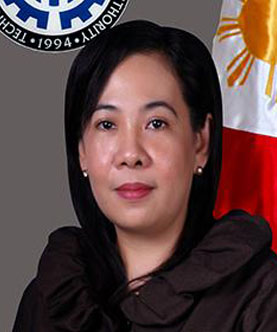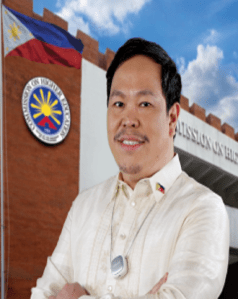
AAIG 2021 Summit Transcript – Ma. Yolanda C. Crisanto

Ma. Yolanda C. Crisanto, MBA

Globe GoLearn: Uplifting education towards 21st Century Learning

Thank you Professor Nanette Fernandez, that was a great introduction. Globe morning, that’s how we greet everyone at Globe and thank you to the faculty and alumni of UST for inviting Globe to be here today. First I’d like to congratulate all of you for launching your National Multisectoral Summit for Educational Transformation. Before I dive into the topic of how the telecom sector helps transform the Philippine education landscape, please allow me to reintroduce to you our company Globe. Most of you know us to be a telecom service provider, but not many people know that today we are more than just a Telco. We are a digital solutions platform with a market value of Php 363 billion serving 85 million customers nationwide and over 8,000 employees at Globe alone and 14,000 employees across the group. The logos you see here represent the companies and brands under the Globe group. And the most popular of which are of course GCash which is the number one payment app in the country. Konsulta MD telemedicine app that democratized primary health care in the Philippines, imagine having to pay only 60 pesos for a doctor’s consultation instead of the usual 1000 to 2000 pesos. Health Now is another health app which is a joint venture with Ayala Corporation Health. We also have our own entertainment studio, Globe Studios and events company Globe Live. Finally, we have a lifestyle company called 917 Lifestyle where you see all the t-shirts and merchandise you see inside the Globe store. Sustainability at Globe is one of our practices at this point in time. We look at ourselves as a leader in this practice, and this comes from our mission in having a purpose which is in everything we do we treat people right to create the globe of good. As a business we act responsibly, being a signatory to the UN Global Compact. We have also committed to contribute to 10 out of the 17 SDGs (Sustainable Development Goals) while focusing on four areas which is to create a digital nation, provide societal impact, caring for people and caring for environment. The things that we do with the education sector contribute to the creation of a digital nation and this morning this is what I would like to be able to discuss with you. It is widely known that the education sector is one of the most severely impacted by the pandemic. Student enrolment went down; those previously studied in private schools moved to public schools and about 860 private schools had to close down. The Department of Education had to implement a modular mode of learning where they transitioned from face-to-face learning to online, print, radio and TV based learning. Both teachers and students needed to adjust to these changes and such big changes also caused a lot of anxiety to teachers, students and also the parents who suddenly found themselves involved in home-schooling. As a sector response, we supported the department of education in three key areas. First is to address the limited access to the internet. At Globe, the sudden increase in demand for data required us to double down on our network builds to improve internet access. This year alone, we’ve invested about 76 billion in cap ex (capital expenditure) to increase our network footprint and upgrade our services. We also worked with DepEd in zero-rating their sources of education content and content platforms to make it easy for teachers and students to get the content that they need, the official content coming from the Department of Education. Second, we supported teachers with professional training to boost their confidence in delivering remote learning. And third, we helped address anxiety amongst teachers, students and parents brought by the pandemic by providing mental wellness programs. For students, there is also a need to equip them with improved functional literacy. You may have come across this study, the latest international assessment of skills and knowledge of our 15 year old students. The Philippines ranked last in reading and second to the last in math and science. We ranked lower than Indonesia and China. Another important point is that the government, our government expenditures and investments for student education are the lowest among all other countries. So Globe is helping students gain functional literacy by empowering communities to make early language literacy content accessible and available through our educational platforms. As part of our commitment to the education sector, we recently launched Go Learn. Go Learn is a unified initiative that brings together products, programs and services that will empower the whole learning ecosystem. It aims to deliver affordable connectivity for all, highly accessible platforms aligned with the current learning set up and safer learning environments to protect our educators and learners from online risks. Go Learn has a wide array of products and services designed exclusively for learners that is very affordable to them. For us in Globe, there is no reason for learning to stop even during a pandemic. To ensure that learners have access to the most relevant content through online and blended learning, we offered free access to education platforms which means that our customers will not incur any data charges when accessing these sites. Under DepEd, free access was given to DepEd Commons and its entire Learning Management System. For CHED, it’s Philippine Connect and for E-TESDA which is the online learning platform of TESDA. To supplement this we also launched a library of online materials with over 800 books and 100 videos under Globe E-Library. This is accessible via the internet and it also comes in a mobile app for both Android and IOS. Globe’s E-Library can be accessed also free of charge. Now we go to the more fundamental changes and initiatives that Globe has done in the past and present during the pandemic. Even prior to this pandemic, Globe has initiated many programs to address the needs of the education sector. One good example is the Global Filipino Schools (GFS) m which aims to transform select public schools into digitally equipped centers of excellence for 21st century learning. Aside from training the teachers on ICT (information and communications technology) and project-based learning, we provided the schools with ICT mobile cart which contains laptops and tablets, a projector and screen plus free internet access. And based on our assessment report, the GFS model helps students research better, connect for emergency purposes, class reports are now prepared using ICT, lessons are presented better with the projector, lessons are also retained better through audio visual materials using ICT equipment. In terms of reach, we have established at least one Global Filipino School at every region in the country. We have a total of 218 public schools that are connected with ICT equipment, teachers training and infrastructure support,  340,000 students are now equipped with digital skills. At the onset of the pandemic we also re-engage our global Filipino teachers with refresher courses and supported their professional development in partnership with the DepEd. We provided the digital skills training to other teachers to help them pivot from face-to-face teaching to online blended learning. To help address anxiety and mental health issues, we provided mental wellness webinars in partnership with the Philippine Mental Health Association. The professional development series are accredited programs under the DepEd National Educators Academy of the Philippines. And this includes digital learning where teachers learn to maximize technology available in delivering online learning including the use of social media; DepEd Commons; teaching through Facebook messenger and possible obstacles we need to be aware of as well as instructional strategies and practices; early language literacy where we equip teachers with the necessary tools that they can use without the need for doing face-to-face teaching, and mental wellness webinar to address overall well-being. Among the topics discussed here are examining your inner struggles, enriching your relationship with others, dealing with grief and loss, and exploring one’s spirituality. An upcoming webinar is also on the wing to support parents in distance learning. In this webinar we hope to tackle social and emotional learning, self-awareness and self-management. Now one of the key catalysts to 21st century readiness is STEM. It is an important branch of learning that will help learners with critical thinking and being adept at using technology. With this, we have piloted a few programs to enhance and nurture the student’s love for STEM. In primary and secondary education, we partnered with Mano Amiga to establish the Globe Maker Lab, an after-school program that provides exercises for better appreciation of STEM. This includes engineering, a basic understanding of electricity and circuitry, robotics, machine learning using Arduino and Raspberry PI, and coding for kids using basic HTML language for web design. For tertiary students, we partnered with the De La Salle University to establish an IT academy where we will design new courses and modules with special focus on ICT education including artificial intelligence. To date, we have trained 49 professors from 10 De La Salle colleges and senior high schools for Technopreneurship 101. Part of the program is a topic on 5G use and how 5G use cases and mobile technology can play a vital role in developing new businesses. Another key support for the education sector is through our award-winning Digital Thumbprint Program. The objective of this program is to educate the youth and parents on digital citizenship and the responsible use of technology. DTP was developed in partnership with SingTel, one of the shareholders of Globe, and Optus, UNICEF and Safer Kids PH. And we are proud to say that the Digital Thumbprint Program has been adopted by the Department of Education as part of its K-12 curriculum. In terms of reach, we have reached 1.9 million students, and going, where we provided access to the programs across all the 17 regions; 115,000 teachers nationwide have gone through the modules and at least 4,000 schools have implemented the program. In terms of our impact, we saw an increase from 74% to 95% awareness on how personal data is used in cyberspace and is now able to discern what’s truly important. We saw a 19% decline in students engaging in group chats or messages with strangers online and a 15% increase in participants who have set their profile settings in Facebook to private. This program has five modules, including the first, is Digital Insight which is designed to teach data privacy and cyber security to young students with topics including password security understanding terms of service which no one ever reads online and a code of conduct when inside a cyber café.  Digital Impact is designed to prevent cyber bullying among kids. And then a Digital Discernment is designed to prevent the spread of fake news so it teaches students to differentiate among facts opinions and false information. Digital Ambition is designed to teach students how to be a good capitalist or a catalyst for good using technology. And then finally we also have a Parents Module which is designed to raise awareness on parent responsibility within today’s digital world. Some of the things that are being taught here include the risks to youth or the risk to children when going online and how to keep account secure and how to manage the internet usage of our children. Here are our key learnings with all of the programs and interventions that we have done through the education sector. For workforce readiness, we believe that STEM education is key in developing 21st century learnings, so amongst academe and the rest of the stakeholders in the sector, we are asking the stakeholders to push our students more into STEM education because we believe that this is the future, right? We need to be able to produce more CIOs and more CPIOs in the country. In the same vein that India has done very successfully by delving its population into IT and technology, the Philippines has the talent and the resource to get into IT and technology if only at the younger years we are able to make STEM attractive to our students. So it may need perhaps a different learning environment, perhaps a different modality or teaching skills, but that is the challenge that we raised to the sector. Another thing that we learned is that for distance learning, access to learning content is important. Like I said, while internet connectivity in the country is still growing, growing in the sense that our infrastructure has to be made bigger and more accessible. It has to match the number of Filipinos in terms of our population that want to go into the internet. But as we do that we, also have to get into more learning content so that when students go to the internet, they do not have to do just Facebook. So that is the digital literacy that we need to imbibe in our students. Being a digital savvy person does not entail you being on just on Facebook, but more than that, to use the power of the internet for learning. For online safety, we’ve noted that the responsible use of technology is core to digital citizenship. You know, even I guess, as ordinary consumers when you’re new to something, like perhaps e-payment like GCash, you get into so many things, like you are a victim of fraud, you’re a victim of hackers and so on and so forth, right? So it is important for each and every person to be responsible in terms of protecting their identity, protecting their personal information when they go into the internet, because no one is going to do that for you except yourself. For overall mental wellness, we have to ensure that psychosocial support includes self-care, wellness and resiliency for teachers including the non-teaching personnel and parents are available. One of the things that we’ve learned during this pandemic is the rise of mental health issues and that has to be addressed, right? A lot of people are getting anxious, a lot of people are having a lot of problems dealing with cabin fever maybe, or having to stay inside the home without seeing their friends. Children are not able to see their friends and co-students, right? So this is something that we need to be aware of and there has to be psychosocial support both from the academe level and also from the other stakeholders in the sector. And finally for stakeholder engagement, we have to practice multi-stakeholder collaboration to enable the digital readiness of our learners. This is what we have learned in practicing sustainability, right? It’s so huge; the problems that we have are so big that we cannot do it alone. And so what we need to do is to partner and collaborate with other institutions, even corporate, that have the knowledge and that have the resources to help. And so I am very very much thankful to the Department of Education for being very open to collaboration with corporate institutions like Globe. And with this partnership, we will be able to address some, if not all of the problems that are facing us in the sector. This ends my presentation. Thank you very much and good morning.
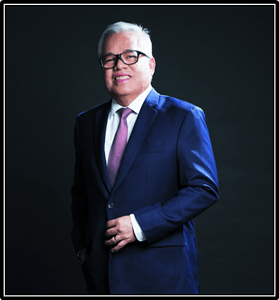

AAIG 2021 Summit Transcript – Sec. Ramon M. Lopez

Sec. Ramon M. Lopez

Keynote Speech Of Secretary Ramon M. Lopez, National Multisectoral Summit For Educational Transformation: AAIG 2021

Ladies and gentlemen, a pleasant morning to the organizers and participants of this webinar series!

I just a few slides pero na-inspire ako doon sa talk ni Dr. Fenix, actually totoo po iyon, internet connectivity is really very important. In fact, I would consider it even as a basic human right nowadays. It’s access to information that would really be a great equalizer in our society. Imagine, anybody, as long connected even at the far-flung areas in our country can have the same access to information as those from the city. They’re expose to designs, information, and many things in the internet. Worldwide info will accessible to them, that alone is really important. I will digress a bit, that is the reason why recently after two decades of closure of the satellite service industry, President Rodrigo Roa Duterte issued another Executive Order (EO) that basically opens up satellite service. The satellite services is one service that can open up the access to interconnectivity and not depending on the tempos. So, once we have that and of course, in addition to all the projects and programs of DICT, mapapadali na ‘yung interconnectivity, lalo na sa malalayong lugar, access to education and information.  And to me, again, I must state that is really now a basic human right. Let me begin my brief presentation with the status of the Philippine manufacturing sector in terms of its readiness to transition to Industry 4.0. The Philippine’s manufacturing sector still has yet to maximized its level of technology utilization. To note some findings, it was recorded that 44% of companies lack maintenance systems and act only when problems arise-; 31% have shopfloor status pushed via scheduled report; 35% control their data using paper-based approaches and another 35% use Excel sheets but don’t integrate them with manufacturing systems; 53% control and track manufacturing activities through a manual, paper-based system, and 58% have no manufacturing equipment connected to the network. However, looking at the openness of the Philippine manufacturing enterprises to industry 4.0, in terms of familiarity by different levels of enterprises, 77% of micro level enterprises are familiar with industry 4.0 while 67% of small and medium enterprises are familiar and lastly 83% of large enterprises are familiar. The primary consideration for shifting to industry 4.0 is if it can improve productivity and competitiveness. This is something we really have to invest one. Innovation and technology advancement; as well as cost and investment and funding share second place with 13% each. Meanwhile, the primary barriers to industry 4.0 are lack of financial capability and unfamiliarity. Industry 4.0 has already changed the employment landscape of the Philippines with AI, data analytics, and AI related jobs rising in prominence. The top 5 emerging jobs in the Philippines, in order, are robotics engineer, cybersecurity specialist, customer success specialist, data scientist, and sales development representative. Due to the changing landscape, there is a need to upskill and reskill our young given that the Philippines has a relatively young population with a median age of 25. We need to develop a highly educated workforce for the future. There are over 790,000 annual college graduates in the country and over 200,000 of these graduates are in the engineering, information technology, and medical-related fields. This is the often-cited factor while many of the foreign investors now located in the country are here. Parati po nilang sina-cite ito, in other countries they see the lack of all these critical talents and human resources. That is why one advantage the Philippines has and the reason why we continue to attract investors. Of course, we have to do a lot more than this, that is also the why we have a lot of liberalization moves in terms of economic reforms, like the Retail Trade law, the Public Service Act revisions, the CREATE Act that we acted and was recently issued by the President last February and has brought down income tax rates and rationalized investment incentives. So, many reforms are being done to attract investments. But definitely, ‘yung manpower resources and talent pool that we have is a clear attraction for foreign investors. The pandemic situation has resulted in the accelerated adoption of digital tools and automation of tasks in all levels of our lives. 55.1% of enterprises are expected to modify their value chain by 2025, and 34.5% are expected to expand their workforce due to automation. Likewise, the technologies most likely to be adopted by 2025 are cloud computing, big data analytics, Internet of Things (IoT), encryption and cyber-security, and artificial intelligence. The two most planned adaptions in response to the pandemic are the acceleration of digitalization of work processes at 84%, followed by providing more opportunities to work remotely at 83%. Amid Industry 4.0 and global developments, our new innovation-centered and science- and technology-based industrial policy, Inclusive Innovation Industrial Strategy, i3S, aims to grow innovative and globally competitive manufacturing, agriculture, services industries. Kasama na po diyan ang micro, small and medium enterprises (MSMEs), whenever we talk of MSMEs, we are not talking of the micro being only a micro, we are trying always to upgrade them and increase their innovativeness being globally competitive. These are training we provide to them, we want them move up that corporate ladder. Of course, we want to strengthen their linkages into domestic and global value chains. So, they supply us and we supply to the other companies in other countries.  Under i3S, the government coordinates policies and provide support measures for industries to take advantage of market opportunities, overcome challenges, and act as an engine for sustained and inclusive growth, as well as job creation and poverty reduction. Furthermore, our Inclusive Filipinnovation and Entrepreneurship Roadmap aims to increase the country’s ability to innovate. With innovation at the core of the country’s strategic industry development policies and programs, we are working towards establishing an inclusive innovation and entrepreneurship ecosystem in the country. Our ultimate aim is for the country to be constituted by connected and creative communities in various regions of the country. In partnership with DOST and other agencies, we are building Regional Inclusive Innovation Centers (RIICs) in different parts of the country. The RIIC consist of a network of innovation agents that collaborate in order to commercialize market-oriented research towards competitiveness in the regions. It is a government initiative in cooperation with the industry and the academe, which aims to generate better employment opportunities, more entrepreneurial activities, and sustainable economic prosperity in the country’s regions. The RIIC initiative adopts an ecosystem-wide approach to bridge the gaps in the country’s innovation and entrepreneurship ecosystem. This involves mapping ecosystem agents and the R&D competencies of higher education institutions. We have four pilot RIICs to date: Legazpi in Region 5; Cebu in Region 7; Cagayan de Oro in Region 9; and Davao in Region 11. And another four are currently being established in Cagayan Valley, Central Luzon, Calabarzon, and Zamboanga. To sustain the initiative per RIIC region, a Core Group of regional stakeholders from government, academe, and industry is formed to drive efforts forward. The RIICs are also receiving active support from these regions’ business groups and MSMEs, local SUCs, and the regional offices of national agencies. Some of the collaborations in the RIICs are expressed through government-academe-industry partnerships, business matching, mentorships, access to shared service facilities as well as R&D laboratories, co-working spaces, fabrication laboratories, startup incubation and acceleration centers. Currently, over 60 MSMEs across the RIICs are substantively engaged with other local partners, covering initiatives such as research partnerships with a local state university or college, technology deployment in the market, and product development. Some of these engagements have translated into formal proposals for funding from DOST, others qualified for local grants-in-aid, and a number are being funded by the firms themselves. Again, to clarify we are greeted to link now with research institutions meet industry. Ibig sabihin the innovation culture is passed on to the industry and any product development or innovation that the industry would like to do or industry problems that they would like to be solved, they now partner with the school that will give them the framework, R&D, and all that. So, it is what I referred to as research-based innovations. Now, consider this, the other way naman is that even the research being done by academic institutions are those demanded by the industry, it now becomes market-based research studies. Hindi lang research for research purposes, kung hindi, these are really the ones needed by the industry. That’s the reason why this is a really beautiful approach, in terms of really having a symbiotic relationship between the academe institution and industry. Moving to DTI’s Industry 4.0 Approach is to support manufacturing firms from end-to-end—from awareness to adoption. DTI provides support throughout the journey of Industry 4.0 transformation of manufacturing enterprises covering all facets of production: skills, financial support, and technology expertise. Industry 4.0 Workshops, meanwhile, gather C-level company executives of leading manufacturing firms in the Philippines to introduce Industry 4.0 concepts and technologies and discuss how these can be leveraged to future-proof their factories. To date, we have conducted Industry 4.0 workshops to more than 200 C-level Executives in the automotive, electronics, aerospace, chemicals, food manufacturing, and the construction materials sectors. DTI has partnered with Siemens, the Asian Development Bank, and the World Economic Forum (WEF) to scale up the adoption of Smart Industry Readiness Index (SIRI) as a digital maturity assessment framework to assess the Industry 4.0-readiness of Philippine manufacturing companies, including MSMEs. SIRI, developed by the Singapore Economic Development Board (EDB), is a suite of frameworks and tools to help manufacturers – regardless of size and industry – start, scale, and sustain their Industry 4.0 transformation. Through SIRI, manufacturers will be equipped with the right insights to better navigate their Industry 4.0 journey, namely:

1. Assessment of the Industry 4.0-readiness of the company’s production dimensions;

2. Benchmarking of the company’s current performance compared to its local and international peers in the industry which have also taken the SIRI Assessment;

3. Determination of the prioritized areas for improvement based on their impact, viability, and alignment to the company’s overall growth strategies.

Through the implementation of the Global SIRI Initiative in the Philippines, we are continuing to pilot the adoption of SIRI in select companies across industries with the goal of attracting more companies to be interested and be familiar with SIRI as well. Consistent with our i3S (Inclusive Innovation Industrial) Strategy, we are implementing the Philippine Skills Framework (PSF) Initiative, which is an inter-agency effort to build the skills and competencies of our human capital and better prepare our country’s workforce for the future economy. It involves the development of sector-specific skills frameworks that will guide the country’s workers in enhancing their skills for particular job roles. This will provide relevant sectoral information, including its employment landscape; the various occupations/job roles, which describe the skills requirement, work context, and expected profile of the worker performing the occupation/job role; the skills description, which defines the performance expectations from each skill; the career pathways, or how these occupations/job roles in the sector are structured progressively; and possible training programs, which link the skills identified under particular occupations/job roles to programs available. Through the PSF, employers will be able to identify the skills and competencies a potential employee must have to be able to effectively fulfill a job role.  Companies can also use the framework to design progressive human resource management and talent development plans for their employees. For their part, job-seekers will be able to define ways forward or upward in a particular industry by specifying the skills and competencies that he or she would need to acquire in order to advance in his or her chosen career path. Furthermore, educational and training institutions can use the skills framework to revise existing curricula or design new courses that would capacitate workers with the competencies demanded by industry currently and in the future. Under our PSF Initiative, we are prioritizing the following sectors: construction, creatives, food (agriculture and fishery); health and wellness; IT-BPM; logistics and supply chain; manufacturing; and tourism. DTI, in partnership with the Logistics Services Philippines (LSPH) Associations, has launched the first-ever PSF – the PSF for the Supply Chain and Logistics sector – which has been prepared through the collaboration between DTI, PTTC, TESDA, PRC and our stakeholders from the local supply chain and logistics industry, with the assistance of consultants from the Singapore Institute of Materials Management, Accelebator, and Thames International Business School. Our intention is for the various PSFs to be integrated and harmonized with their corresponding Industry Roadmaps, which have been guiding our industry development initiatives under our Manufacturing Resurgence Program. On Digital Economy Initiatives, some other DTI initiatives for capacity building towards the digital economy include:

ASEAN SME Academy – a one-stop multi-platform online learning and information resource which aims to provide training and mentorship to enhance ASEAN SMEs’ capabilities to grow and compete regionally and internationally.

CTRL + BIZ: Reboot Now! – a series of FREE webinars that we have been doing since the start of the pandemic, so that we can digitally transform a lot of our MSMEs. Those who did not even have their emails or Facebook, Instagram connections, and all that. We wanted them to continue their marketing part and of course, their research and development part by allowing and teaching them how to digitalize.

Tech Tools for MSMEs during COVID19 – a Google site developed by DTI to provide information to MSMEs on the different technology tools, applications, platforms and resources available in coping with the challenges of the community quarantine.

Trabaho and Negosyo Skills Pathway –For this project, the DTI E-commerce group will be spearheading the launching of Trabaho Skills Pathway which compose of tracks on entrepreneurial skills for online enterprises and digital skills pathway for MSMEs, as well as tracks on Pivot and Embrace Technology (PET), consisting of workshop series that aims to cater to those who are seeking remote employment or wish to adopt alternative careers.

We also partnered with many institutions with this one, in fact, dito ka-partner natin ang Informatics, alumnus din ng UST po iyan.

AI technologies can unlock 1 trillion USD to Southeast Asia’s GDP; 92 billion of which goes to the Philippines GDP. AI technology can be used in a wide range of fields and industries. These include but are not limited to: precision farming, knowing what to farm, where to farm, what kind of crop, where AI can be used to forecast supply, demand, as well as the weather or autonomous vehicles, which can make use of AI in order to further develop autonomous driving systems or predictive maintenance; smart manufacturing, making use of AI in the Internet of Things (IoT), intelligent sensors, automation, and many more that are connecting many of the machines. AI can also be used to make AI-powered customer assistants, AI-powered human agents, and predictive call routing.

Looking at the global state of AI as of 2020, the most commonly adopted uses for AI revolves around product innovation, optimization of service operations and customer service, risk modelling, and energy and output optimization.

To this end, DTI, in coordination with other concerned national government agencies and in consultation with key stakeholders from industry and the academe, launched the National Artificial Intelligence (AI) Strategy Roadmap to guide the adoption of AI in the country and its utilization in the agribusiness, manufacturing, and services industries.

The country’s National AI Roadmap will position the Philippines as a regional hub for big data processing and analytics building on its large footprint in the global IT and BPM sectors. It also envisions AI to be a catalyst of digitalization among our MSMEs. Take note, kasama po ang ating MSMEs whenever we talk about AI.

A key strategic imperative of the Roadmap is to accelerate innovation with AI by establishing a National Center for AI Research (N-CAIR). The NCAIR will serve as a hub where multinational companies, even small companies, can explore various R&D projects with the Philippine government, its researchers, and/or its linkages with higher educational institutions (HEIs) and research and development institutions (RDIs).

Just like ‘yung na kuwento po natin kanina sa regional inclusive innovation centers, symbiotic relationship between industries and the research centers, this is the same relationship with the NCAIR and industry. Just like any national research center, N-CAIR will serve as an incubator for collaboration between universities, industries, startups, and other government research units.

NCAIR aims to offer consultancy services, AI tech products, and data literacy training, with focus on manufacturing, services, construction, finance/banking, healthcare, and/or agriculture industries. Which is envisioned to be a technology provider and research leader in areas that include, among others, precision agriculture, smart city, resilience technology, and smart manufacturing.

New technologies can drive inclusive, resilient, inclusive, sustainable, and industrial development for the Philippines. Smart manufacturing introduces innovation and competitiveness transforming how goods are produced and what goods are produced. In the process, it provides better job and income opportunities, creates new industries, and promotes environmental sustainability, builds industrial competitiveness, and enhances linkages of enterprises to other industries.

In closing, let me emphasize that investments in new technologies, digitalization, and innovation are investments on resilience, sustainability, competitiveness, and long-term business growth which are all necessary as we enter our economic recovery. Together, let us help create a strong manufacturing industry that will build back better a more competitive and innovative Philippines, as envisioned by President Rodrigo Roa Duterte.

Maraming salamat po at mabuhay tayong lahat.

AAIG 2021 Summit Transcript – Dr. Alberto Victor P. Fenix, Jr.

Alberto Victor P. Fenix, Jr., PhD

I would like to greet Evelyn Songco, the president of the UST Alumni Association; Dean Anthony Vasco; and to my fellow speakers:  DepEd Undersecretary Tonisito Umali, TESDA Deputy Director General Rosanna Urdaneta, and our DTI Secretary Ramon Lopez. My fellow speakers are all my good friends. An paraphrasing the memorable line in the movie Casablanca,  I would say that you have rounded up the Usual Suspects to be the speakers of today’s forum. And I’d like to say  good morning to all participants of this forum. I hope to do justice to the topic assigned to me. I have a brief presentation and I don’t even have a PowerPoint. Being a businessman I strive to be sparse in words but heavy in content. I’m currently one of the members of an education task force convened by the Philippine Chamber of Commerce and Industry and we are in the thick of a work to come up with recommendations to improve our education system to meet the demands of the current, of the 4th Industrial Revolution. The CDF (Comprehensive Development Framework) paper to be titled “Innovate Education, Transform Our Future” will be published in booklet form and available in November 2021. According to recent McKinsey report, and I quote: “The fourth Industrial Revolution which started in the 2010s is causing the lines between physical, digital and biological realms to blur. From artificial intelligence to self-driving cars, robotics, 3D printing, quantum computing, virtual reality and more, are already upon us.” These technologies are reshaping the world, or to put it in another way, disrupting our lives. It is disrupting the world of work, eliminating metatarsal jobs but creating new jobs requiring higher skills and knowledge. Technologies made possible by the ever increasing availability of cheap computing power, storage and connectivity are are operating many routine tasks.  Computers are increasingly taking over bookkeeping, clerical work and repetitive manufacturing jobs. At the same time, many jobs are being created that require creativity and problem-solving skills. So now we come to the topic of my talk. What are the challenges that Industry 4.0 brings to higher education? The answer is that higher education needs to move beyond existing approaches. It needs to restructure and utilize new methods of teaching and learning. Although our topic is limited to higher education, let me state that this process of restructuring higher education must start with restructuring basic education. In basic education, learners should acquire the 3 R’s: Reading Writing and Rithmetic. In class today we must digital literacy. The learning should be a circular staircase with increasing complexity as the learner moves from grade level to the next grade level. Learners need a strong foundation in literacy and numeracy. You cannot code if you cannot do math. You cannot communicate effectively if you cannot read or write. You cannot innovate without knowledge. Higher education should continue this circular staircase with still increasing complexity as we give the learners that skills, competencies and capabilities needed in the world of work. The way education is organized and structured today is still the same as it was centuries ago.  Because even date it back beyond 1620 when the University of Santo Tomas was founded, education was bricks and mortar. In a location, teacher and students in a classroom, and what was being taught and learned was mostly dependent on what the teacher knew. I dare say that if you still see this structure in a majority if not in most educational institutions in our country, to me education is absorbing information into our brains and accessing that information when we need it. With the technologies I previously mentioned, information is more and more digitized, stored and made accessible by electronic means. The early version of this is Google. When we need to look something up, we research using Google. Before, we would go to the library or use the more concise encyclopedia. The digitization of information makes possible the simultaneous provision too many, the knowledge when we need it, where we need it, and customized for what we need it for.  The next step will be augmented or virtual reality, where one can experience and learn touring the canals of Venice without going to Venice; in learning how to operate a complicated machine, an early example of the latter is the flight simulator where pilots can hone their piloting skills. There will therefore be an rise in online education. Here we must focus on the most urgent need on education à internet connectivity. We have to put in place connectivity with faster bandwidth and with access available to all Filipinos from all over the country. Connectivity is essential to modern Life so much so that I think it is a public utility and I believe it should be made available for free. This gives a future education, however, makes me wrestle with what I believe is just as important which is that as social persons, we need interaction with other persons especially with our peers. My own prediction is that education in the future will be hybrid with online learning at home or in other places but with period spent in bricks and mortar institutions for person-to-person interaction. Therefore in addition to having universal and countrywide connectivity,  our educators must search for technologies that transform our education system. And also in addition, our educational institutions should fill to other roles. One is research and development of new technologies, products and services. This is woefully lacking in our Philippine educational institutions today.  The second is to be a stimulus for the growth and development of the communities around it. Such as setting up business incubators, reskilling and upskilling programs, etc. We have been reading and hearing that the Philippines is a laggard, not only in its economic development but also in many other metrics of which education is one of them. I believe our being a laggard in education is at the core of our country, being a laggard in development. It is imperative that we re-structure our education system immediately, we cannot stand still. We must redouble our efforts to shorten the gap or even overtake the other countries. How to achieve this, this is what the PCCI education task force is currently working on to come up with recommendations to innovate education, transform our future. Thank you very much for inviting me to speak the day today. As I said earlier to the early people that came in, I laso have connections to the University of Santo Tomas. My mother is an alumna with a Bachelors Degree in Education and she went on to really become and educator, establishing the Teacher’s College at Notre Dame University in Cotobato where she educated and trained thousands of teachers in that school. So again, thank you very much, good morning.

AAIG 2021 Summit Transcript – DDG Rosanna A. Urdaneta

Rosanna A. Urdaneta, MBA

TVET Responding to the Challenges of Industry 4.0 and the New Normal and Beyond

Thank you very much for such a beautiful introduction. First and foremost, I would like to extend my thanks to the organizers specially to the UST Alumni Association, Inc.,  the UST Graduate School Center for Continuing Professional Education and Development for this invitation to this webinar. I am really very glad to be with you today my fellow alumni in this gathering. I am also a UST graduate. It is not very often that i get to be with my fellow and to be with my beloved alma mater, the institution that has molded me and hold me to what I am today, virtually this time although. To the Dean of the UST Graduate School, Professor Michael Vasco; fellow panelist Secretary Ramon Lopez, boss in TESDA; USec Tonisito Umali; Dr. Alberto Fenix, a champion and advocate of TVET also; our moderator Professor Emmanuel Batoon; fellow UST alumni, colleagues and friends who are present in this webinar, a good and pleasant day to all..

Let me start my presentation by giving a short context, although most of us already know about this. There are several trends that are affecting the world of work and this includes technology advancement. We at TESDA have this particular challenge that if we come up with training regulations, competency standards, by the time we finish a training regulation, the technology is already obsolete. That is really the basic challenge we face when doing training regulations in TESDA. The shifting paradigm of jobs and tasks, demographics, climate change and impact of Covid-19. Let me focus on the Covid-19. Let me focus on the Covid-19 pandemic. We will agree that it has indeed changed the way we do things, such as in education , work and entertainment. Two years ago, we never imagined with the use of online and virtual platforms for conferences would be very efficient and effective. Before, I don’t usually do this, I want to travel. So as much as possible, we travel a lot in TESDA for us to be able to really have meetings even outside of the country or outside of Metro Manila because we are happy to travel. Although right now it is very easy to do a webinar. Like this webinar we’re having, now we have gotten used to this type of set up already. The Covid-19 has in fact focused us to really embrace the 4th industrial revolution. It has forced to adapt us to the 4th industrial revolution. We see that Covid-19 demonstrated the importance of digital readiness among us, especially our learners and workers. And technical vocational education and training play a pivotal role in helping industries and workers stay competitive in this volatile, uncertain, complex and ambiguous world, or what is known as VUCA world. Since this is my first time to speak in the UST with many educators and professors in the audience, I would like to take this opportunity to advocate the Philippine Qualifications Framework (PQF), which was institutionalized to Republic Act 10968 in 2017. The Philippine Qualifications Framework is a national policy that describes the levels of educational qualifications and sets the standards for qualification station outcomes. It is a quality-assured national system for the development.  recognition and award of qualification based on standards of knowledge, skills and values acquired in different ways and methods by learners and workers in the country. We had this evaluated, the PQF, by the World Bank. And one of the issues and challenges that arose is how we will be able to popularize the Philippine Qualifications Framework; how one will want to appreciate this particular framework, and what is in it for government, academe, industry if we have a Philippine Qualifications Framework. We should all note that the implementation of the PQF should be supported by other policies and laws related to education and labor. For most of this is the ladderization act. So, we are not only looking at the PQF but also the ladderization act, because it would be the one that will establish credits and pathways within the PQF in the context of lifelong learning which will provide or weave the whole education and training system continuum. My hope is that UST would also have a ladderized  program (like TVET) which is also towards higher education. We would also observe in most cases that TVET is not considered as part of the education sector because of its tradualling role both  in education and labor. But with the PQF, which is the main objective of supporting academic and worker mobility, TVET is very well situated. As defined by UNESCO and ILO, TVET refers to aspects of the educational process involving in addition to general education the study of technologies and related sciences and the acquisition of practical skills, attitudes, understanding and knowledge relating to occupants in various sectors of economic and social life. The knowledge, skills, attitude and degrees of competence for TVET are defined in levels 1 to 5 of the PQF descriptor. Let me now proceed to TESDA’s national policies and initiatives to respond to Industry 4.0 and other technological and global disruptions. As the TVET authority in the country, TESDA ensures that the TVET sector responds to the requirements of the industry and the world of work. We have serious engagement within TESDA when we come up with training regulations even to the point of planning and prioritization of what particular qualifications will be our priority; the industry is with us already. Especially in the development of training regulations, even development of training packages, the industry is with us. Because we realized that these disruptions we are facing and because of Industry 4.0 in the pandemic, we really need the industry. This we could only do with the support of all our stakeholders in education. Of course the government, the industry, the labor sector and the academe, and that includes higher education institutions such as the University of Santo Tomas. As a TVET authority, we laid down a national policy in which all the TVET programs and initiatives are anchored. It has always been thought that TESDA is only a training center, but we are an Authority. And being an authority, we are in the law of TESDA, we are really the one who comes up with the National Technical Education and Skills Development Plan (NTESDP). This has been the blueprint for the TVET sector in the Philippines for the perusal of not just TESDA but all of our stakeholders including other government agencies, industries, employers as well as you (academe). The NTESDP has a goal of vibrant quality TVET for decent work and sustainable inclusive growth. So it’s two-pronged strategic direction: TVET for global competitiveness and workforce readiness and TVET for social equity and poverty reduction. Likewise, we have developed the TVET 4.0 framework which is anchored on the NTESDP in ensuring that we prepare the workforce for the 4th Industrial Revolution. We said that in order for us to have an equipped learner, our equipped learned must have STEM related skills, essential skills, emotional skills. So with TVET being part of the education system, our focus is of course the learner. The future of  Jobs Report 2018 by the world economic forum mentioned that executives prefer employees with critical thinking and collaboration skills even now more than with technical skills. This framework basically shows the different actions we can take at various levels to maximise the opportunities brought by the 4th Industrial Revolution. It contains specific measures to ensure the right competencies are imparted to boost learners and of course those that will take on the learning process which are the trainers and institutions. All of these initiatives serve as a guide for both public and private TVET providers alike to ensure they produce 4th IR already learners, trainers, assessors and ensure that their TVET institutions and programs are a par with the  4th Industrial Revolution standards. Let me also share our priority initiatives which I would also like for higher education institutions and all our stakeholders to take a closer look and of course to give your support. First, TESDA has recently approved its policy on area-based and demand driven TVET which would make sure the TVET programs are responsive to the critical needs defined by the industries and employers in order to produce rightfully skilled workers in a specific area or locality. This is also to align our growing skills supply with the shifting skills demand. It has been said before that there’s a mismatch, so we are now trying to really provide a venue or a platform in which we would really want our stakeholders, to listen to our stakeholders and tell us what are the skills, the knowledge and the attitudes that we should be or must be providing and integrating in all our training regulations. The Flexible Learning Delivery à we also have our flexible modes of learning delivery wherein the implementing guidelines issued by TESDA allows TVET schools to utilize any of the following training delivery modes: distance learning, face-to-face, online learning and blended learning. Choosing a particular training delivery will depend on the capacity of the school and the capability of trainers and also takes into consideration the learners’ access to resources and technology. TESDA Online Program à the next initiative, the TESDA Online Program o TOrP, has been our lifeblood during the height of the community quarantine imposed in the country last year. Like I said, together with Netflix, we are the top grosser during the quarantine period.  When schools are closed nationwide, we had to find a way to continue delivering our quality TVET programs to all Filipinos. That is why we made concerted efforts to quickly strengthen the capacity of the TESDA online program to be able to cater to more Filipinos nationwide and the overseas Filipino workers to offer more relevant TVET courses. The TOP currently offers 101 free online courses across a variety of sectors and some in partnership with other institutions.  The TOP has been online since 2012 but its user base doubled since March 2020 when community quarantines first went into effect in the country. That is 2.8 million users since 2012 with 1/2 or 1.4 million new users during this Covid-19 period. To further enhance the TOP, we are also looking to integrate its program offerings in the course offerings of our TESDA-run schools. We will convert it as a learning management system and we shall also be coming up with regional learning management system for the utilization of all our TESDA schools and TESDA training centers.  We are now also in the process of finalizing our guidelines in recognizing an individual’s learning acquired through non-formal or informal means. This is especially important as we understand that there are individuals who are experts in their respective fields and are up to par or even beyond the standards set by the training regulations promulgated by TESDA. Through the recognition of prior learning, we hope to bring proper and official recognition to these individuals in order to boost their employment prospects. We have also recently issued the guidelines on micro-credential. Micro-credentialing offers a new way of certifying a portfolio of skills; recognizing small and discreet learning as well as credentialing existing knowledge and skills that are transferable across jobs in order to navigate the future of work. It is essentially small credentials which recognise the achievement of a skill, skillset or knowledge that is required by industry, professional associations or the community. They are also referred to as bite-size programs, nano-degrees, badges for stackable micro-degrees. A micro-credential certificate can be gained through institutional assessment, RPL or Recognition of Prior Learning, or recognition of current competency.  Micro credential courses are also easier and faster to develop, allowing faster response to the changing demands of the workplace and complements the area base demand-driven strategy in TVET. Likewise, we have also started our work of the development of a skills passport system which will further improve in which our learners and the Filipinos in general can avail TESDA scholarship programs and at the same time encourage them to continuously undertake additional learning activities in the context of lifelong learning. We also have our TVET innovation conceptual framework which is our blueprint for modernizing and upgrading our TVET institutions nationwide. Basically it will annex our regional TVET innovation  center in our TESDA run schools and will have the components on an authentic learning environment, experience for learners, research and development and entrepreneurships component incorporated in TVET offerings.  Higher level TVET programs including new and emerging technologies and of course establishment of close partnership with the industry for the industry practitioners to become mentors in the authentic work environment or the innovation center. Development of higher-level qualifications à lastly, we have issued our guidelines of course on the pilot implementation and development of the alignment of TQF level four and TQF levels four and five. We have already have our diploma course running and now we are now trying to deal with the new blend and Sydney Accord accreditation process. The development of higher TVET qualifications would mean we are able to develop technologies. The main objective of this is to support the government and the private sector in enhancing the Philippines global competitiveness to the development of highly competitive and innovative Filipino workforce. With this, again I encourage my fellow alumni in the UST and all our colleagues in the academe to advocate and look into pursuing and offering TVET qualifications in your institutions especially in your engineering programs and architecture. We need the practical side in TVET in order to produce well-rounded engineering professionals. Now that we are at the tail end of the fourth cycle of the National TESD Plan and we are now moving forward to the fifth cycle of the ground works for the preparation and development of the National TESD Plan, we will again gain us guidance which will again give us guidance for the medium term. In order for our workers,  enterprises, and by extension our economy, to be resilient to the future  shocks on the 4th  IR, and since the 5th IR in fact the Japan government is already looking into this and other potential disruptions, we should be focusing on the following things or priorities for the next cycle of the  NTESDP. Of course we have to come up with a new mindset and , adapting critical thinking and innovativeness to adapt to the new normal and the 5th Industrial Revolution. We have always been telling ourselves it’s okay for face-to-face, but we need to change our mindset that face-to-face is just one among those delivery mechanisms that we shall be using in the 4th IR and the 5th IR because we should strengthen our digital capacity especially for all our trainors and instructors. Capacity in developing and delivering flexible training, we have to develop more blended modules as well as expand our TESDA online program. We have to re-skill and upskill  existing workers and new entrants to the world of work for them to be able to bounce back. This is also our contribution to the MSMEs and of course to the national employment strategy, revitalization of employment. Re-style TVET, as the world of work is drastically changing, shifting to remote or hybrid forms of work so thus TVET need to be transformed as well. TVET delivery should focus on industry and academe partnership and collaboration. Again thank you all, thank you very much for the invitation, keep safe and God bless us all.

AAIG 2021 Summit Transcript – Usec. Tonisito M.C. Umali

Usec. Tonisito M.C. Umali, Esq.

DepEd: Problems, Challenges, Plans and Direction in Education

Magandang umaga po sa ating lahat at salamat po Prof. Emmanuel Batoon for that very kind, very nice words you used to introduce me po. Can I request po our staff if you could flash our slides please. Yung topic ko po professor parang on challenges that I’ll contextualize it based on what you said na lamang. At alam po nating lahat na pag sinabi pong Department of Education, ang ating pong tinututukan dito ay basic education from kinder to senior high school, grade 12. At kapag higher education, it should be Commission and Higher Education. I’ll exert effort po to contextualize what I will be showing to you and try to relate it to our higher education institutions in relation to the problems, challenges same issues and concerns I would say that we are also confronted with in basic education. So we all start with, this is the mandate given or Article 2 Section 17. So let’s start with the legal basis why it is very important that we are all here right now talking about the challenges of education in light of the pandemic and how we will respond to these challenges and relate this to the mandate given to us by the constitution. Sa ilalim po ng Saligang Batas Article 2 Section 17, wala na hong debate, pag uusap, dahil sinabi na po na ang edukasyon, agham, teknolohiya, sining, kultura pati ang palakasan at pareho po ang DepEd at CHED, ang higher education institution may kinalaman po rito ay dapat pong bigyan ng prioridad ng estado to foster patriotism, nationalism, accelerate social progress and promote total human liberation and development. Kapag dinala nyo rin po to, ang ating Saligang Batas, ay isa po sa saligang batas sa buong mundo na meron pong ganitong uri ng provision. Ito pong provision na ito, Article 14 Section 1, wala po yan  sa 1973 and 1935 Philippine Constitutions. Wala po yan. Noong 1987 constitution po na authored by Fr. Bernas during the constitutional commission deliberations of 1986, inilagay po ito. At tinanong si Fr. Bernas bakit kailangan ba ito, kailangan mailagay ito sa Saligang Batas para maalala ng estado, ng pamahalaan, ng CHED, ng TESDA, ng DepEd ang kanilang mandato patungkol sa pagsulong at pag protekta sa karapatan ng lahat ng mamamayan sa isang dekalidad na edukasyon, sa lahat ng antas, mula kinder, elementary, high school, college at kung magpupunta to ng tech-voc level. And we should also take appropriate steps to make such education accessible to all. Sa bahagi po ng DepEd, sa basic education, ito po ang aming misyon at nais ko lang po diinan kung bakit po mahalaga itong forum na ito. At I’m sure CHED and TESDA also has that framework in actively engaging the family, our community and other stakeholders [I’m looking at the bottom portion of the slide] in making sure that when we do our mandate, to make sure that there’s life-long learning, kailangan maunawaan po ng buong komunidad, ng buong bansa, na ito po ay hindi lamang aming mandato, trabaho, sa DepEd pati na rin sa CHED at TESDA. I’m sure there are laws out there telling our partner CHED and TESDA that we have to engage partners and make them realize that this is not the responsibility alone of DepEd, CHED and TESDA but a collective responsibility. And that’s why we really appreciate for example what our alumni association in UST is doing right now, engaging in a forum like this, inviting resource speakers, talking about challenges, talking about issues, possible solutions. At dahil po dito nakikita po natin na yung konsepto na ang pagsisiguro na madisiplina at mahubog ang isipang ng mga bata ay talaga naming kolektibong responsibilidad po nating lahat. [Next slide please]. In DepEd, meron po kaming ipinatupad na Basic Education Learning Continuity Plan (BE-LCP). I’m sure in UST and in all other HEIs, bumuo po kayo ng plano, paano po ninyo masisiguro na maipatuloy ang edukasyon maski po ganito po ang ating sitwasyon. Sa basic education talagang bawal po ang face-to-face. Sa HEIs po natin, meron pong mga, tulad po ng mga TESDA< I have seend the regulations of TESDA [hello po DDG, kamusta po kayo] at dahil tumitingin din po kami sa mga regulation ng TESDA with respect to our tech-voc track and how we implement tech-voc senior high school. At ang isa pong rule ng TESDA na sinusunod po naming ay may component po sigurado ito, tech-voc track po natin, na its very nature na dapat talaga na face-to-face. You cannot for example you talk about welding unless may welding equipment na pwedeng dalhin sa bahay n gating mag-aaral ay hindi po talaga uubra na face-to-face po lamang ito. Kailangan may halong face-to-face po ito para may aktual sila para magkukumpuni ng mga sasakyan, mga ilang halimbawa po lang iyan na talagang kailangang may component ng face-to-face, pag tech-voc po talaga by the very nature of the course at ganoon rin po sa HEI. And what we’re just trying to say is, kailangan may age requirement pa rin po to. Sa TESDA they may be 21 years old bago po ito yung face-to-face. So we follow that so if we have a basic education senior high school learners na papasa po sa ganitong edad, meron po kaming ganuong mga patakaran din sa DepEd. Ang sinasabi ko lamang po ay ang DepEd ay may klaro pong plano katulad po ng UST, katulad po ng CHED at TESDA, para po magpatuloy ang pag aaral at kung papaano po maisasagawa ito,  limited face-to-face, sa kaso po ninyo dahil po of age na po yung mga estudyante po natin. Pero po ang anak ko po, Prof. Batoon, nag la-Law po sa UST. It’s really a privilege my son was very happy when he learned that I was invited and I told him, cguro anak alam na nandidiyan ka kaya ako naimbitahan. Cguro alam din nila na ang aking ama ay isa rin pong alumnus ng UST. Ang aking pong, marami po kaming mga pinsang buo, fiscal na po ngayon, UST College, ang anak ko po nag Legal Management din po sa UST. And i’m really proud and I’m very happy that my son has enrolled in this very prestigious and reputable institution, University of Santo Tomas. At nakita ko po kung paano nyo po hinubog ang aking anak. At nakikita ko po, my point Prof. Batoon, maski po kolehiyo yung aking anak po noon online po sila eh. Online learning, wala pong face to face. Kaya po itong aking ipinapakita po sa inyo [next slide please] lalo na po ngayon sa law school ay pwedeng pwede rin po, aplikado rin po itng mga experiencen namin po rito with respect to online learning. But the principles of BE-LCP uh which is anchored on, yung healthy and safety and well-being of our people and personnel, yung mga teachers po namin, yan po personal na pumapasok sa ating mga paaralan para po mag gawa ng mga learning packets, dyan po nagnyayari sa ating mga paaralan yung mga printed modules,  activity sheets po, nilalagay sa envelope or maliit na bag, kukunin ng mga magulang linggo linggo, ibabalik, pagkatapos ng isang linggo o sa susunod na linggo para kunin naman yung kanilang modules sa susunod na linggo. At yan po yung isa sa hamon po sa amin sa DepEd. Bagamat ang CHED siguro wala po ganyang modality na nangyayari. Yung amin po namang  online based learning kitang kita ko po dahil nitong unang araw ng pasukan ng DepEd, September 13, umikot po tayo. Doon po ako sa division office, doon po sa lugar kung saan nag o-online class yung aming guro, and I’m sure ganoon rin ang hamon ng mga propesor po natin sa tertiary level. Mejo mabigat po talaga kasi pag tinatawag po ng teacher yung isang bata, nakita ko minsan hindi maganda po yung internet connectivity eh. At dahil po doon, hindi nakakasunod minsan po yung bata pag tinanong dahil di niya narinig siguro yung guro. Yun talaga ang mabigat at marami pong inherent limitations of course when you do online learning. You could see, and are easily addressed when there’s face-to-face lalo na na po sa amin sa basic education, makikita nyo po yung mukha ng bata kung medyo hindi nauunawaan, makikita po ninyo kung nakikinig o hindi, sa amin naman po ay medyo hindi naman po namin pinilipit ang bata. Hindi ko po alam sa UST kung ayaw po magbukas ng video basta magpaliwanag lamang kung bakit, hindi, pero pwede naman naming ipakiusap na buksan ang screen kasi kailangan nakikinig, baka hindi naman nakikinig, pero kapag nagsabi na may issues maunawain naman po ang DepEd so dapat ganoon so we allow them. So kapag hind mo nakikita, you don’t even know if they are listening or not. So these are the challenges, simple as it may appear but they are very crucial to learning kung hindi nakikinig ang bata, hindi maganda ang connectivity, lalong lalo na po sa basic education, ay talaga pong may epekto ito. Kaya po yung bahagi ng printed learning modules na aming pong dinideliver na kanila pong sinsasagutan at binabalik po sa amin, mano-mano kung wala po silang connectivity na ma-upload poi to, malaking bahagi poi to ng basic education learning continuity plan sa basic education. So what we did, we would like to share, I don’t know how UST did this knowing that with the limited capability of our learners to read the modules, wala nga pong teachers,  to access online learning or even asynchronous, yung iba wala naman pong gadget, at kung may gadget wala naman connectivity, kung may connectivity may issue naman sa pambayad ng load, nakita po naming yan, we streamlined yung tinatawag po naming most essential learning competencies. Ito po, alam na alam po natin ito, ano po ba yung competency, ano po ba yung kaalaman na gusto nating maunawaan ng bata. I’m sure sa kolehiyo ganyan din po yan, pagkatapos ng isang learning session, dapat meron siya. So pinili po naming ito, yung dating dalawa pinagsama, at yung dating humigit kumulang na labing limang libong most essential learning competencies po natin sa basic education, bumaba poi to sa himigit kumulang na limang libo. Pero hindi po ibig sabihin po nito na wala nang matututunan ang mga bata, ngunit ang binabanggit lang po naming ay hindi na po ito yung dati na kung ano tinuturo natin nung face-to-face, kumpleto ano ang lahat ng gusto nating maunawaan, tinanggap na po naming iyon, hindi na po natin kakayanin ito at tinukoy na lang natin yung pupwede pa  given all the challenges and limitations that we have. We prepared our teachers in the same way that I’m sure UST and higher education institutions prepared theirs, because we never did this before, online. Bagamat  that’s a learning modality, pwede naman, hindi naman natin ito ginagami, ang mga professor natin hindi face-to-face. So we did training for our teachers, how to maximize the various learning management systems, how to upload their lessons, how to grade, do their lesson plans. Ganoon po. Lahat po iyan aming ginawa bahagi po ng kabuuan plano. At yung health standards in schools and workplaces, we made sure that we are compliant with IATF. And I am looking at item 4, meron po kaming tinatawag na Brigada Eskwela, Oplan Balik Eskwela, partnership activitiesn a noon araw talaga pong gace-to-face ang aktibidad na ito, nag focus po kami ngayon in engaging partners. For example, siguro ang UST hindi na po kailangan dahil marami na pong professional na kaya pong magbigay ng  psychosocial intervention sa kanilang mga estudyante. Kami po sa basic eduation sa mga pampublikong paaralan, marami po tayong items for guidance counselors pero hindi po ito napupuno, kulang po ng supply. Lahat po ng aming humigit kumulang na 47,000 public school, hindi po lahat yang may guidance counselors, maliit na bahagi lang po nyan ang meron dahil kapag titignan nyo po yung kabuuang populasyon ng registered guidance counselors ay talaga naman pong kaunti at medyo maliit pa po yata yung sweldo sa amin kaya po hindi po nila kinukuha. Ngunit ang ginawa po namin dyan, ang punto ko po ay, meron po tayong framework on partnership. We partner with Psychological Association of the Philippines, with DSWD, with other private companies. Sila po ang nagsasagawa ng ating mga psychosocial debriefing activities. Marami po kaming mga videos na naka upload sa aming management learning portal na pwede pong i-access ng mga teachers .At kapag kailangan po ng some form of 1-on-1 counselling at walang RGC (Registered Guidance Counselor) ang aming pong paaralan, meron  po kaming mekanismo para magkaroon. Ang punto ko po, ito po ay nangyayari, how we equip our parents in partnership with the Home Schoolers Association of the Philippines, kasi ngayon ang magulang po lalo na sa basic education kailangan tinututukan, hindi naman kinakailangan malaman nila yung asignatura kung hindi yung kanilang skills na mag monitor ng bata. Meron po kaming mga learning sessions po dyan para sa mga parents. Hindi lang po kami ang kumikilos dyan, pati po ang   private sector partners. When we talk about gadgets, we don’t have enough budget to give gadgets to all of our 900,000 public school teachers but we’re trying. Napakalaki po ng budget na kakailanganin po nyan, inuunti unti po namin. We have 22.5 million more or less public school learners. When you talk about quality education, the way I said it in Article 14 Section 1, necessarily in this kind of situation dapat may gadget ang mga bata. We do this in partnership with the local government units, that’s what we’re trying. And to say under item 5, partner local government unit partners, allocate funds to purchase tablets, smartphones, and they give this to our children. Katulong po sila, we have engaged the IBPAP (Information Technology and Business Process Association of the Philippines), an association of businesses export processing zones. Yung kanila pong  three to five-year old laptops, gadgets na pwedeng pwede pa rin pong gamitin, nakita ko po, maayos na maayos po  dinodonate po nila na direcho sa ating mga paaralan. Yun po ang ating punto, yan po ang isang hamon ngayong panahon na ito na sinasabi po natin na atin pong nahaharap sa tulong po ng ating mga partners. So we do this, aside from online learning, we also have TV and radio-based instruction. You have DepEd TV sa channel 13. Maganda po mga lessons namin. I am sure UST doing also synchronous and asynchronous mode of learning.

Meron po kaming regional contextualized learning continuity plan, kino-contextual po yan. Sa central office, meron po kami, we contextualized that sa region iba’t iba po ang sitwasyon sa ibaba, pati sa division. Ang division po namin is province or city-wide, katumbas po yan ng parang provincial local government unit or city local government unit, yan po ang aming governance structure. So kino-contextualized poi tong planong ito.

Meron din po kami, and I would like to learn from UST too, how do we assess our learners whether they are really learning what they need to learn given all these challenges. May guidelines po kami kung papaano po i-a-asses. Binigyan natin ng gabay ang ating mga guro at tayo po ay nakikipag ugnayan sa mga magulang para malaman po talaga kung talagang  nakukuha ng mga bata ang kanilang dapat pong matutuhan. We want to learn from our UST partner, maybe, how you are assessing your learners too.

Meron po kaming preparasyon for face-to-face, so mag pa pilot testing muna po kami nung plano na ito pero kailangan po ng approval ng Malacanang, pero meron po kaming ginagawang ganito po.

Teachers being considered as frontliners, we have a special campaign para po makumbinsi, at kami po ay natutuwa, ang aming mga guro, malaking porsiyento po ang nagpapabakuna  at nakipag ugnayan po kami sa DOH para po magkaroon ng available na vaccine sa aming mga teachers who should all be considered frontliners. So we have a program on that.

Ito pong school year namin nagsimula September 13, alam ko po sa higher education nauna  na po kayo lalo na kung tri-sem kayo. And we would like to share na yung pong aming enrolment ay nasa 27.5 (million) na po sa kabuuan. At sa pampublikong paaralan ay nalampasan na po namin yung numero, yung nakita po ninyo 100% bagamat sa private schools po ay yun po ang aming nakikita ay medyo bumaba ang bilang po, pero sa kabuuan lumalabas lumipat sa pampublikong paaralan. I don’t know if it’s the same trend in higher education, if they are enrolling in state colleges and universities. But in basic education medyo ganoon po ang nangyayari at nauunawan natin ito dahil nga po sa challenges po siguro na kumita ang magulang at magbayad ng matrikula. Ngunit gusto ko po sabihin na sa basic education meron po tayong GASTPE, we have support for teachers in private education, 18,000 pesos a year. Meron po tayong support grade seven to ten 13,000 (pesos) kapag qualified sa NCR per student. I hope UST High School is receiving its share, 22,500 (pesos) sa senior high school kapag NCR, 11,000 (pesos) sa junior high school. Kapag highly urbanized cities, 20,000 (pesos) pag sa senior high school voucher, may mga qualification po yan. 80% of the amount, rather, that I mentioned kung galing din sa private school lumipat uli ng private school, junior high school to senior high. Kung public school high lumipat po ng private senior high, mas malaki po yung kanilang makukuha. Ang punto ko po ay mayroon pong ganong programa ang pamahalaan. Dahil tinitignan po namin kayo, UST, bilang partner. High school lalo na po, at senior high school po ninyo. At pag sinabi po kasing sistema ng edukasyon, kasama po dyan ang tertiary level,  we are not only talking about the public system of education. The Philippine education system is composed of public and private education system. Under Article 14, there’s a section there, Section 4 I believe, it talks about the complementary role of public and private education. Kayo po  ay partners po namin. Kaya nga po nakalagay sa Saligang Batas, ang estado ay dapay may sistema ng programa, maintaining scholarship grant subsidies, yan po yung sa amin sa bahagi ng basic education. Sa tertiary level, they have the UniFAST (Unified Student Financial Assistance System for. Tertiary Education) Iskolar ng Bayan law, DOST meron din po yan I’m sure. Yan po ang ilan sa mga programang ipinapatupad. Sana po ang UST po natin ay masami pong FAST slot na nakukuha sa UniFAST I hope.  But what i’m saying is private and public schools are partners and we are investing to improve our learning environment, improving our alternative learning system. Those who cannot enrol in the formal school, we have a very strong alternative learning system. Malnourished and under nourished, malaking bagay po rin yan, may programa po tayo dyan, mahigit dalawang milyon, taon taon may special feeding program po tayo na ginagawa. Yan po ay alinsunod lalong lalo na po sa unang mga taon po, baka sa kolehiyo hindi po ganon nakikita ito bilang suliranin. Pero sa atin po, ang bata lalo na kinder to grade 3, pag nagugutom hindi po nila   talaga mauunawaan ang kanila po nilang pinag aaralan. Wala po silang tamang nutrisyon, tamang timbang base sa kanilang edad at laki, binibigyan po natin, meron po tayong schoold feeding program po para dyan. At pinapapatuloy po natin yan, maski ngayon po dinedeliver na lamang po yung meal sa bahay po nung batang under nourished or severely wasted. Computerization program, we have that definitely especially in this time of pandemic. We are really trying our best to re-introduce the teacher to learner ratio and we have successfully done that. Nasa one is to 32 hanggang one is to 28 na po tayo sa elementary level, mas maganda medyo mataas ng bahagya sa high school. Pero wala na po yung nung araw nasa one id to 60 or 70, wala na po yan. And we are now enhancing power and trying to strengthen our TV and radio based capability to deliver our e-modules on top of what we’re trying to do on online learning. There are continuing reforms po na meron po tayo, ito po yung kampanya ng ating Kalihim Leonor “Liling” Magtolis-Briones on Sulong Edukalidad.

Ito po ang nais ko po sigurong sabihin, isa po talagang malaking karangalan, hindi po ako magsasawang banggitin po ito na makasama ko po kayong lahat. Sa ating pong National Multisectoral Summit on Educational Transformation. Alam po ninyo, ito pong ating partner, UST Graduate School Center for Continuing Professional Education and Development, UST Alumni Association, si Dean Henry hello po, convenor nitong summit po nating ito, Prof. Evelyn Songco, Dr. Michael, Prof. Jocelyn, Prof. Ida, Dr. Fernando, ang atin pong host napakabait po Prof. Emmanuel, Engr. Jonathan, other speakers DDG Rosanna, Chairman Alberto Fenix, Secretary Ramon Lopez, marami pong salamat sa inyo. Dahil po sa inyong lahat, kami po ay talagang lubos na nagpapasalamat. Yung amin pong isinusulong na magpatuloy pong mangarap ang ating mga anak, kolehiyo man o sa high school o elementarya ay pwede pa rin pong mangyari dahil ang kanila pong pangarap ay pwedeng mangyari dahil po sa pagpapatuloy po ng ating edukasyon sa gitna po ng pandemyang ito. Mabuhay po kayo, mabuhay po ang University of Santo Tomas Alumni Association. Mabuhay po ang kabataang Pilipino. Salamat po!

AAIG 2021 Summit Transcript – Commissioner Aldrin A. Darilag

Commissioner Aldrin A. Darilag, PhD

Thank you, my congratulations to the University of Santo Tomas Alumni Association Incorporated for organizing this significant academic discourse entitled National Multisectoral Summit for Educational Transformation: an Academe, Alumni, Industry, and Government Collaboration. To the men and women of the (UST) Alumni Association Incorporated, my felicitations for this initiative and trail blazing effort of consolidating the parameters of the academe, alumni, industry, and government to lay down on the discussion table all the necessary initiatives and interventions for a more sustainable growth and development in the education sector. It has been 538 days since the Philippines had a lockdown in response to Covid-19 pandemic. Since then, the country has reported around almost 2 million cases and almost 34,000 deaths. While we remain hopeful that Covid-19 will be eradicated soon, noting that almost 1.8 million cases have recovered from the virus, it is certain that Covid-19 has disrupted and changed the landscape of the higher education. Quoting Professor Fernando Reimers’ statement in the Global Education Innovation Initiatives of Harvard University for educators, Covid-19 pandemic is a quintessential adaptive and transformative challenge, one for which there is no pre-configured playbook that can guide appropriate responses. Education leaders must swiftly design responses and with specific context in mind as the pandemic runs its course. This call for educators to urgently adapt to the needs of our times and respond to multiple adaptive and transformative challenges necessary for the revitalization of the vital roles of government, academe and industry to actively involve in the discussion and co-create systemic and long-term solutions. The multisectoral group should unite to work better during this time of crisis. Covid-19 continues to have a profound impact on the economic, political and cultural landscapes of societies around the globe. Since Covid has prevented mobility, millions of Filipinos have lost their jobs, sacrificing their daily source of income, endangering the possibility of enrolling their children resulting to a significant decline in student enrolment, increased reports on school closures and an unexpected faculty retrenchment. According to the UNESCO, Covid-19 Educational Disruption and Response Task Force, through its global monitoring report, almost 1.2 billion young learners have been affected by school closures around the world. As to the particular statistics of our country during the pandemic, the report records that more than 28 million Filipino learners have been affected with more than 3.5 million of those belonging to the higher education sector. To somehow mitigate the effect of Covid-19 to education and for learning continuity of children, countries around the world have been implementing remote education schemes. Yet majority of the world’s children, particularly those belonging to the poorer households, do not have the sufficient capabilities like internet access, connectivity, personal computers, television and radio at home, amplifying at a great extent the effects of the so-called learning inequalities. Students who lack access to the technologies resorted to home-based learning as their last option to continue their education. As a consequence many face the risk of never returning to school, undoing years of progress made in education around the world.

For better appreciation of everyone, let me present the following scenarios, as per the data presented by UNICEF 2020. While more than 90 of the countries adopted digital and or broadcast remote learning policies, only 60 percent did so for pre-primary education. Policy measures taken by the governments to ensure learning continuity through broadcast or digital media allowed for potentially reaching 69% of school children at maximum in pre-primary to secondary education globally; 31% of school children worldwide or 463 million cannot be reached by the broadcast and internet-based remote learning policies either due to the lack of necessary technological assets at home or because they were not targeted by the adopted policies. Online platforms were the most used means by the government to deliver education while schools remain closed with 83 percent of countries using this method. However, this allowed for potentially reaching only about a quarter of school children worldwide. Television had the potential to reach the most students, 62% globally, only 16% of school children could be reached by radio based learning worldwide. Globally, three out of four students who cannot be reached by the remote learning policies come from rural areas and or belong to the poorest households. Both public and private higher education institutions had to adjust to the new situation where face-to-face interaction and mass gatherings are prohibited. Committed to their mandate, universities and colleges in the Philippines devised innovative ways to fulfill their tri-focal functions of instruction, research and community extension. Everyone adjusted to work from home arrangements, from the operations and support service units to the administrators and teachers. From the confines of their homes, distant from their students and physical resources available in schools, teachers and administrators were put to the task of revising and adapting course syllabi and requirements as they shifted to flexible learning modalities. Learning management systems were used by students and teachers who have access to electronic devices and reliable internet connections, while students who have limited access to computers or internet have relied on smart phones to exchange messages notes and materials through text messaging email and social media. To be specific, according to the Department of Information and Communications Technology (DICT) and the Philippines Statistical Research and Training Institute, in their 2019 National ICT Household survey, only about 18 percent of households have nationwide access to a stable internet connection, leaving 82 percent disconnected. The survey also revealed that there were more households who can have access to radio and television rather than wi-fi connected laptops. Indeed it is true connectivity where people can attribute their level of accessibility to information and education in this time of health crisis. Amidst today’s global context and ongoing battles against Covid-19, the world we live has truly changed.

To provide all of you a glimpse of the scenario let me share a brief update on the three crucial Es: education, employment and economy. In a study of Pokrel and Chhetri in the year 2021, this Covid-19 pandemic has created the largest disruption of the education system in human history affecting nearly 1.6 billion learners in more than 200 countries. Broadly identified challenges as the world transitions into alternative modes of teaching and learning includes issues on accessibility, affordability, flexibility, learning pedagogy, lifelong learning and education policy. In terms of the prospects of the world economy, the UN Department of Education and Social Affairs through its World Economic Situation and Prospects mid-2020 report states that internationally, a 3.2% contraction is projected to hit the market. This would mean that 8.5 trillion dollars will be lost as output over the next two years, pushing 34 million people into extreme poverty. And with the last E, which is employment, the latest Covid-19 monitoring report of the International Labor Organization indicates that 94% of jobs equivalent to 2.7 billion workers are affected by lockdown measures, with 25 million of those are currently under the threat of unemployment. Furthermore, the report highlighted that young workers are the major victims of socio-economic consequences of this pandemic, as they are disproportionately impacted by multiple and simultaneous shocks, such as loss of jobs, disruption of training and education, and lack of new employment opportunities. Given these situations, the Commission has embarked on a series of proactive response measures that shall ensure that higher education learning continuity is realized amidst the time of pandemic. The Commission are constantly working with significant stakeholders to ensure that one’s socio-economic background should not be a deterrent factor to prevent students for an equitable quality education. To share quick wins about what we do in the Commission, in line with this equitable education, we support our higher education campuses through the provision of a 3 billion peso budget to help them transform to smart campus in partnership with the DICT. CHED is determined to provide scholarship grants to children of overseas Filipino workers in partnership with DOLE, and lastly, our consistency in providing free higher education through the universal access to quality tertiary education in upholding RA 10931. However, while we sustain the gains we have achieved recently, some universities had to suspend remote or online classes caused by severe natural calamities. For instance, due to super typhoon Rolly, some public universities have temporarily suspended all forms of academic classes, secondary to the major catastrophic blow of the super typhoon to the telecommunications lines in Region 5 and the devastation of homes of both faculty and students. It is inspiring to note that part of the rebuilding of the lives and opportunities in Region 5, after the catastrophic effects of super typhoon Rolly, also involved government, academe, industry partnerships. As an example, the Bicol Foundation for Higher Education collaborated with Camarines North State College towards the launching of the operation Bangon Bikolandia in order to pull funds towards the resuscitation of the vehicle region. Other initiatives include Project Sympathy of Catanduanes State University wherein the university pooled funds for the provision of galvanized iron sheets that were used as roofing of destructed houses in the region. The Pitmaster Foundation worked with Congressman Joey Salceda and Bicol University for the provision of 10,000 relief packs containing essential commodities and 195 sacks of rice benefiting the affected families of the typhoon. Undeniably through the indefatigable spirit of voluntarism of various public and private agencies, our higher education institutions continue to become conduits of social transformation.

As part of the Commission on Higher Education’s continued response to these challenges is the strengthening of partnerships with government, academy and industry which led to the following initiatives. First is the launching of PHL CHED Connect. The Commission launched PHL CHED Connect as a free online and comprehensive knowledge resource platform that maintains higher education learning materials in techs. media and other digital assets. These online materials are useful for teaching, learning and resource purposes and are universally accessed by both teachers and learners. As of the latest data, more than 1,609 content materials have been uploaded, engaging more than 60,412 unique users.

Second is the Nationwide Caravan for CHED HiEd Bayanihan. The commission launched the CHED HiEd Bayanihan to address the lack of familiarity and training of our faculty members to flexible learning modes. There were holistic and free teacher training and development programs through our collaboration with public and private HEIs, IT and other business firms. The program offered value seminars and workshops that cover the following topics: virtual classroom management, presentation making, facilitating learning, open and distance education, learning management systems, module design and development, various teaching strategies and methods, learning assessment, and the use of emerging technologies.

Third, making campuses of State Universities and Colleges (SUC) “SMART”. Pursuant to Section 10 of Republic Act number 11494, also known as The Bayanihan To Recover As One Act, Congress has allocated a significant amount of funding to cover investments for ICT infrastructure, acquisition of learning management systems and other appropriate equipment to fully implement flexible learning modalities for more than 100 public institutions of higher learning. During the virtual press conference of the CHED chair held last June 23, 89 SUCs received a total of Php1,958,432,005.78 to jump start the groundwork for SMART campus universities and colleges to emerge in the country, wherein we have state universities and colleges as the major recipients.

Number four is the Rationalization of the CHED-SIKAP Grant. To ensure global competitiveness of artificial education graduates and provide concrete assistance to teaching personnel for the advancement of research and development, the Commission has released shared Memorandum Order number 6 series of 2020 regarding the guidelines for the Scholarships for Instructors’ Knowledge Advancement Program or SIKAP Grant. This unique grant provides opportunities for higher education institutions’ teaching personnel or former HEI teaching personnel who wish to persevere in the academe, acquire their advanced degrees, and to serve the country. During this past few Joint CEB and mancom meetings of CHED, and in view of the growing demand for more faculty members to be capacitated under the new normal, the Commission has approved a set of amendments that would allow the SIKAP Grant to be more accessible and responsive to our faculty members by instituting much needed reforms. Such as but not limited to: first is the streamlining the admission process to our regional offices to ensure the slots are given to truly disturbing recipients at a timely and judicious manner; second, increasing the probability of completion of programs by ensuring that our scholars study on full-time basis only and to further augment such expectation; increasing the amount of privileges higher than prevailing rates to secure a stable supply of applicants and stimulate superior academic performance from the scholars; the fifth one is the flexible delivery of student affairs and services.

Another commendable initiative of the Commission in this time of Covid-19 pandemic is the implementation of the CHED Memorandum Order (CMO) number 8 series of 2021, entitled Guidelines on the Implementation of Flexible Delivery of Student Affairs and Services or SAS programs during the Covid-19 pandemic. Through this measure, the Commission aims to pursue and retrofit the delivery of student affairs and services program during the pandemic through the partner HEIs, focus on catering to mental health of students to various modes or options most appropriate to them. The guidelines shall adequately communicate the needs of our stakeholders and provide strategies for the effective delivery of flexible student affairs and services programs in all HEIs. This policy is also an affirmation that CHED is adamant in prioritizing the mental health and welfare of students and faculty members on top of the pressing concerns of Philippine higher education institutions.

Next is the partnership with state universities and colleges and the local government units. Almost 28 universities have been temporarily used as quarantined facilities benefiting more than 17,000 patients in their respective immediate localities. State universities and colleges have also partnered with other agencies such as small time independent makers and developers to make face masks and disinfectants for distribution to students and faculty. To date, almost 93 million pesos have been allocated to 59 HEIs for the said initiative.

Next is the reconstitution of the technical partner for all discipline. The primary objectives of this initiative are the following: first is to develop a roadmap for the academic discipline programs responsive to the demands of the 21st century and the fourth industrial revolution; second is to promote outcomes based education anchored on the competitiveness and employability of the Filipino graduates; third is to ensure accountability, transparency and participation in policy making and program, institutional monitoring and evaluation; and last objective of this reconstitution of the technical panel is to institutionalize the representation of essential experts from the government, industry, academe for the various disciplines, policy and standard recommendations.

We have also the Centers of Excellence (COE) and Centers of Development (COD) program wherein the Commission recognizes, that due to overwhelming simultaneous and rapid developments involving the various academic disciplines in their context, challenges and innovations both locally and abroad, existing policies and guidelines have become swiftly dated. Hence, CHED is doing its utmost best to revise the general criteria on identifying potential COEs and CODs across all programs as we align these new parameters to both current and future demands of our learners amidst an increasingly globalized world. This will also cover the important participation of the industry and government in the implementation of the COE and COD mandates relative to the institution’s leadership in the community.

Next initiative is our continuation to refine policies processes and programs to adopt the new normal in higher education. The Commission has also introduced relevant guidelines policies, projects, initiatives and programs with the intent to effectively streamline international initiatives in higher education through the laudable pursuits of the Philippine government and its commitment to bilateral, multilateral, regional and international agreements. Some of the noteworthy initiatives of the Commission on internationalization are as follows. So we have the CHED Memorandum Order number 55 series of 2016 or the Policy Framework and Strategies in the Internationalization of the Philippine Higher Education. This proactive endeavor of the Commission aims to articulate the Philippine Higher Education Internationalization Policy to provide a national perspective and context for various initiatives related to the subject of internationalization. We have also CHED Memorandum Order number 62 series of 2016 for the Policy Standards and Guidelines for Transnational Education Programs. The Commission envisions to internationalize Philippine higher education to facilitate the development of human resource responsive to the needs of the times. And we have CHED Memorandum Order number 22 series of 2013 for the Revised Policy Standards and Guidelines on Student Internship Abroad Program. This comprehensive framework of the Commission on student exchange programs served as a catalyst in providing tertiary students the opportunity to acquire practical knowledge, skills and desirable attitudes in recognized foreign host establishment or organizations in countries abroad. For this year 2021, there has been substantial progress reached in making limited face-to-face classes a possibility which includes in-person internships. Although flexible learning is still deemed the safest modality of learning under the current situation, the Commission recognizes that face-to-face delivery is necessary for courses where tactile, experiential or hands-on learning is most crucial.

Therefore, upon securing the approval from Malacanang, the Commission on Higher Education and the Department of Health, released the Joint Memorandum Circular number 2021-001 or the Guidelines on the Gradual Reopening of Campuses of higher education institutions for limited face-to-face classes during Covid-19 pandemic. Recognizing the vital need of providing additional manpower to support the Philippine healthcare system during this pandemic, six medical and allied health science degree programs, namely, nursing medical technology, physical therapy, medicine, midwifery, and public health, have been identified as priority programs permitted to conduct limited face-to-face classes. Two allied health programs have been added in the recent months, namely, dentistry and radiologic technology.

As of June 2021, 93 colleges and universities across the country are currently authorized to proceed with limited face-to-face classes and internship as duly certified by the respected CHED regional offices. These higher education institutions in the country have passed the health standards and stringent retrofitting imposed by the local and national government authorities to ensure a safe and conducive space for learning of our students. These institutions have been allowed to conduct limited face-to-face classes for the purposes of  enabling students to achieve key learning outcomes on specialized laboratory courses and hospital-based clinical clerkship, internship practicum and providing additional manpower to the country’s health care system.

During the High Level Cultural Forum on ASEAN held last May, I manifested to the panel of experts the following recommendations in the regional policy framework, which seeks to promote greater understanding, tolerance and a sense of regional agenda among the people of ASEAN. And this includes the following: adoption of culture-based education and the implementation of culture-based management and governance programs for local executives, diplomats and foreign affairs stakeholders; strengthening of the education tourism projects and initiatives of the member states through a framework of sustainable development goals; revitalization and continuation of flexible learning modalities and schemes during and even after Covid-19 pandemic; cross-sectoral and cross-filler collaboration between ASEAN economic community and ASEAN social cultural community through ASEAN education ministers meeting in implementing knowledge based economy projects and initiatives; and the cross-border academic programs that will allow seamless delivery of internationalized and contextualized academic training and formation.

Cognizant of the HEIs education research and service functions, higher education institutions in the Philippines certainly have their agenda full in terms of collaborating and working with government agencies, other academic institutions and the industry sector. We are definite that our colleges and universities are working constantly to address the adverse impacts of Covid-19 to the social, economic, political and environmental facets of our society. As we recognize that much have been won in the fight against Covid-19, our higher education institutions must proceed to adapting to the now normal by focusing on future needs.

As CHED reported during the Senate budget hearing deliberations, stated below are some areas for possible collaborations with our higher education institutions. First is the provision of continuing capacity building for faculty members particularly on specialized and content heavy courses. Second, resolving connectivity issues in higher education institutions and addressing issues on software, hardware and people-ware and on the advancement of smart campuses. Third, enhancement of mental health and support services to students and faculty members. Fourth, strengthening the quality of our teachers through responsive and innovative pre-service teacher education programs. And fifth, provision of support to research programs and initiatives related to futures-thinking and the constant pursuance of the sustainable development goals.

On my part, with futures-thinking as one of my focal advocacies in the Commission, expect my responsibility of being the torch bearer of this young and growing academic field. I shall fulfill this by strengthening the discourse on futures-thinking in the deliberation and development of new and comprehensive national higher education research agenda of the Philippines. This shall be accomplished through substantial consultations and other possible joint ventures such as the establishment and my spearheading of the futures-thinking consortium amongst various state universities and colleges in Region 5. If I may just share, I have spearheaded the futures-thinking consortium in higher education in Regions 5, 8 and 11. The objectives of this consortium where, first, is to democratize access and utilization of concepts tools and frameworks involved in the futures-thinking and strategic foresight among HEIs; second is to establish an inclusive indigenized and responsive frameworks on futures-thinking in the context of higher education development within the region; third is to operationalize the regional framework and futures-thinking through various programs and activities related to instruction research and community extension; fourth is to develop a regional roadmap on the future of higher education in the region through futures-thinking and strategic foresight indicating the short-term, medium-term and long-term objectives and target outcomes; and fifth to foster and cultivate linkages and partnerships with local, regional and international institutions and stakeholders from both the public and private sectors. The establishment of the futures-thinking consortium was supplemented with other initiatives of the Commission, such as the establishment of the technical working group for SMART campus implementation in all the state universities and colleges; second is the creation of practical working group with DepEd, TESDA and PCW to intensify gender mainstreaming and gender sensitivity in the particular offerings of basic education, technical and vocational education and the higher education institutions; third is the project called From Transition to Transformation: Building the New Landscape of Continuity and Connectivism in the Philippine Higher Education. Its key strategic imperative is to move Philippine higher education from the stage of transition due to the Covid-19 pandemic towards the stage of transformation, focused on the new normal, with emphasis on contextualizing, analyzing and operationalizing new dimensions of continuity and connectivism between and among the Commission, the greater higher education sector and the stakeholders. During the meeting of the TWG, the members came up with two key result areas or KRAs as its undertakings. First is to have a clear change context which means that there is a need to articulate the specific types, areas, drivers and forms of change that Philippine higher education ecosystem will need to be mindful of, given the impact of Covid-19 and how it will be shaped the new normal. Second one is to have the agile responses towards transformation; this could be attained through a package of short-term, mid-term and long-term responses that will analyse the transformation of Philippine higher education in the new normal. With these KRAs in mind, this TWG shall be able to recommend new paradigm, parameters and purpose for higher education’s transformation to a new landscape of continuity and connectivism. As our nation progresses in this battle against the pandemic, extra extraordinary collaborations between all stakeholders need to be instituted through partnerships and collaborations stakeholders from all sectors of the society united towards the improvement of education with our learners at the core of our collective societal transformation. Our universities and colleges will continue to serve their mandates to advance knowledge through teaching and research, and will continue to democratize technical expertise to their respective immediate communities. While our higher education institutions uphold these mandates, the Commission also secures its directive of coordinated partnerships with all the sectors of our society. The Commission affirms the conviction that it is through the bayanihan spirit that Filipinos can rise above the crisis and emergencies. This is an assertion of the Commission that tertiary education must espouse the notions, procedures and processes of 21st century learning. The education of the new millennium connotes revolutionized approaches to realize excellent teaching and learning that are at par with international standards. This pandemic has surely taught us to fully realize that the Philippine higher education needs to be revitalized for futures-thinking. Covid-19 pandemic made us understand that we should shift from the traditional schemes of education and adhere with the parameters of sustainable education instead.

Again, my gratitude to the UST Alumni Association Incorporated for this given opportunity to impart some of the Commission’s initiative to at least mitigate the effects of this health pandemic. May this catalyze further partnerships of the government and non-government agencies with the Commission on Higher Education as we continue to heal and learn as one. Thank you.