AAIG 2021 Summit Transcript – Engr. Rolando J. Paulino, Jr.

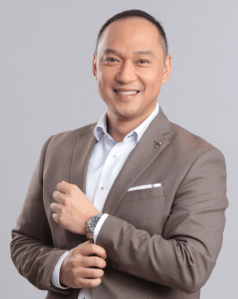
Engr. Rolando J. Paulino, Jr.

Understanding the foundation of the subject(s) we are passionate about is important to OUR success in Industry 4.0

Thank you very much Clarence and thank you for the very warm introduction and welcome. And I just want to also take this opportunity with AAIG for giving me another shot in in presenting in this conference. Let me just check if I can share my screen now and kick things off with you. Okay, so good morning everybody and for those who are not in the Philippines right now and listening in our global economy right now so good afternoon or good evening wherever you are. So what I would like to share with you today is really about the passion that we have in, for me what have shaped me in the last 27 years working for an industrial company is really the fact that in a lot of the changes that we all have to undergo through there’s one thing that remains constant. And that is really about understanding the passion that we have, in being passionate on certain subjects. And what is more important for me despite of all those changes that have happened is actually understanding what fundamentally is behind those subjects. So that’s what I would like that the journey to bring with you, and that my background has shaped me a lot. I’ve been teaching with the UST now for the last six months and at the same time with De La Salle University. So I can say I’m a young educator for in the meantime but also I have a 21 year old Matthew who’s actually a third year Materials Engineering student right now. And I think that experiences that I had led me to two things, and that is really about creating and making dreams possible and that our success is not just about ourselves but it’s really about making others successful. So as we go through this presentation think about those two things because as educators, as students, as leaders in the academe, we have a role to play in all of that. Now people have been talking about Industry 4.0 and maybe as the first presentation I would just like to ground everybody what industry 4.0 really means and what it is. And let me tell you a story, when I was young we have a small business. My mom will ask me or my dad will ask me to support them in that business and one of the things that I will need to do is to buy materials for that business or even collect the money for people who owe us. Whenever my mom will ask me to do that she will give me a sketch of where that company is or where that person is and how to actually get there. And that sketch has been my guide to actually reach that place. And for me if you compared it with the journey that we’re being here, being right now, that sketch is equivalent to more or less Industry 1.0. It’s a basic fundamental. This is the map; this is where you’re going to. And after that things have been a bit more advanced and I started getting maps of Manila as I grew older and as a student of UST. And then eventually as I joined the industry, GPS started coming in and that’s what industry 3.0 is all about. So you have the GPS in your car nowadays that actually tells you that I’m going to a certain location, that’s where I’m going to and this is the path that you can take. Now the thing with GPS is that it has a single algorithm. It will ask you the fastest or it will ask you whether you want the fastest or the shortest distance. But lately if you look at it, those especially the pre-Covid period when the traffic of Manila was just unbearable and going to work takes you three hours. A lot of us have actually started using Waze, and what Waze does is that it gives you the pathway of where the location that you want to be or the destination you want to be. But at the same time it tells you the most efficient path to do that to get there. And how does it do it, it actually uses the information of the crowd, the people traveling the speed in a certain street and collate that and turn it into something intelligent and say look if you use this road this will be faster based on that analysis that we have. And I guess that’s the reality of our world nowadays. It’s about the inter-connectiveness, it’s about the data that we actually have and use on a daily basis to actually make efficient, reliable decisions on the things we want to.  The example I gave to you was a very simple example that we do on a day-to-day life. It’s about where to go and how technology can actually help. If you expand that in a much wider sense in a business, we now have technology that actually enables us to predict failure. In the work that I do, we actually collect tons of data. But the most, the beauty of those data now is we can put it on an algorithm and tells us this particular equipment can, will actually fail if you don’t do anything because of the trends that we have. And that’s also the reason why with Malampaya, the energy coming from Malampaya, we can supply at a very high reliability of 99.9% because of the data that we have and because of how we use that internet to actually help us make better decisions. So that’s the journey that we had in the world from that simple sketch that my mom gave me to the fact now that we can actually use Waze, and Waze telling us how the best path to actually go to a certain destination. And I’m sure there’s a lot of examples that you can now start thinking about how Industry 4.0 and the use of data in the internet is actually helping you to actually make better decisions, more reliable decisions and at the same time set a path for yourself. Now I’ve been reflecting on this and interestingly I got this book back in 2008. So one of the things that I do whenever I’m in a country is I will go to the old bookstore shops, the second-hand bookstore, and being a nerd and being an engineer myself I want some old books on engineering. And I came across this. It’s the Engineering in the Ancient World and the Asian Culture and Society. And if you just look on the contents and this book was it’s in the early 90s that this was written, sorry early 1910s, and if you look at it the issues that they are dealing with not just in the Asian world but even in the time this book was written, it’s almost the same things that we’re actually dealing with right now. Power, energy, I mean World War II was because of Japan’s search for better and sustainable energy for their country. I mean water supply it continues to be an issue for us. I mean just last year right we had the issue on having low water pressure and that are dams going down. Anything, in all of these things, engineering continued to play a very important part, right? And these things have not changed. And so the question that I have myself is if these needs are not changing, what is changing with Industry 4.0? And I have two authors with you to share some thoughts in that. And one is Michael Sandel who wrote a number of books on justice and the Tyranny of Merit. And in latest books he said, “In the new economic order the notion of work tied to a lifelong career is over; what matters now are innovation, flexibility, entrepreneurialism and a constant willingness to learn new skills.” Yuval Harari also said in his book 21 Lessons From The 21st Century he said, “In the 21st century we’re flooded by enormous amount of information …,” we’re talking about beyond Waze here, right? “People need the ability to make sense of this information to tell the difference between what is important, what is unimportant and above all, combine many bits of information into a broad picture of the world, and in order for us to keep up with the world of 2050, you will need not merely new ideas and products but above all reinvent yourself again and again and again.” Which actually made me reflect that, what remains constant is really about understanding the fundamentals because for you to learn new skills and be able to adapt and to be able to make sense of all this information that we have you need to have a very fundamental understanding of subjects that you’re really passionate about. Just think about it, as a doctor, a doctor with the help of new MRI technology, with the help of other technology where they can actually go inside the body, they still need to step back and analyze what am I actually doing here, what am I trying to do with this person, and I by doing this am I curing him or her, am I promoting wellness? And a lot of these things if you look at it whilst artificial intelligence and machine learning can actually help us analyze, there’s still one thing that artificial or machine learning cannot actually have. And that’s the ability to have an emotion, and that’s the ability to have empathy with others. And this is a very important skill that a doctor, a dentist, a nurse, an engineer, a leader in the industry needs to have. Aside from all this information where certain equipment and tools can help you, if you look at it, empathy and the emotions around it, it’s not something that AI can do. And that pretty much is actually grounding us to really understand what the technology and what do we really need moving forward. I want to share with you just a graph of how I see careers of people and how I see the career that I had for myself and as an engineer. Now when I started my engineering degree at UST, definitely there was an increase in my technical skills. I learned to understand the beauty of thermodynamics, I learned to understand why stresses are both important and dangerous to our equipment and to the design that we have. I learned to understand that behind this technology and the technical things that I’m doing, I’m also doing it for something bigger. And that’s really being part of an organization and being part of something that actually helps others to become successful. And I think we all go through this path, that from doing our degree, we learn a lot and then as we go along the need for that technical understanding becomes less and less. Now I want to emphasize on this area of that graph, because it is important that as we spent more time in leadership roles, in roles that actually makes a lot of impact and difference, as doctorate researchers, as educators. What is more important is not the vast of knowledge that we continuously have. It is important to continue to develop ourselves but it’s what’s more important is that we have the understanding of what’s really important. And it could be the foundations of thermodynamics, in my case; it could be the foundation of biology. And because a lot of these things doesn’t change through time because by understanding that fundamental, it enables us to think more clearly so we can actually influence more what can happen in the future. And I would like to close with this in a challenge that I put into this summit. If you go back to my first line about my journey from Industry 1.0 to Industry 4.0, it is important to understand that. But for me it’s not about waiting for the future to happen. For me what is more fundamental is actually being able to do the things we want to do now and start influencing the journey that we have. And there are three things that we can do together not just in the summit, in the classroom, but also in the offices that we’re in. The first one really is about falling in love with the subjects that we’re passionate about. We don’t need to fall in love with the same subjects. We just have to fall in love in the things that we really want. Because falling in love in those subjects allows us to contribute and be complementing one another. It is important that in falling in love with those subjects we also understand the fundamentals around it. The second thing that we can do is really about communicating, engaging and actively participating in the discourse especially nowadays. I think the information that we get as Yuval Harari said is just enormous, and it is important that we be able to focus that information and be able to process that discussion in something that is tangible for us, for us to make sense and allow us to use that information to adapt to new skills. And maybe last point really is, whilst as we continue to be a world of commerce, whilst money continued to be important in the decisions in the work that we’re doing, it is important that leadership skills of empathy, listening, finding your own purpose, communicating and collaboration continue to be an important and fundamental part of the education system that we have but also a very important part of the society that we continue to live with. Thank you very much for this opportunity.
AAIG 2021 Summit Transcript – Jeffrey O. Tarayao

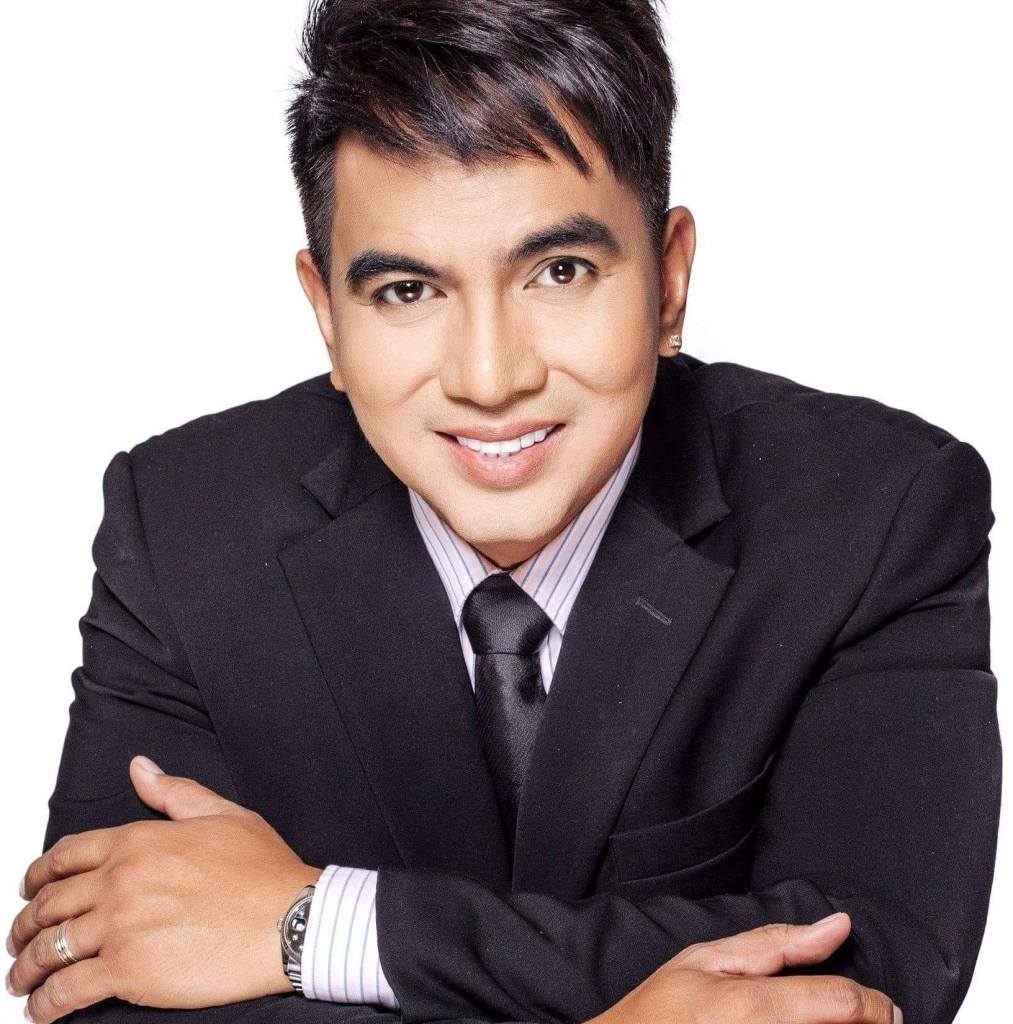
Jeffrey O. Tarayao

Good morning friends and thank you for spending your TGIF morning with us. My personal thanks to the UST Alumni Association for having me today. I think the earlier presentation of Don has really painted the scenario that our graduates face in the light of Industry 4.0 particularly its workplace. So let me add some more thoughts particularly what educational institutions can do, in most occasions, universities not only to prepare our graduates but also transform the learning experience that may endure subsequent industrial revolutions in society because earlier this year there were talks of industry5.0 already you know. So we already heard how technological progress is enabling machines to compete or to complete many of the tasks that once required human beings. Nearly every job will change. Many quite profoundly and the overwhelming majority of today’s employees will need to develop new skills. Thus, universities will play an important role in nurturing high skill talent the country needs for sustainable economic growth. However, the automation revolution has been accelerated by Covid-19. Companies are emerging from the crisis into a workplace of physical distancing and major changes in customer behaviors and preferences. Before Covid-19, the largest disruptions to work involved new technologies in growing trade links. Covid-19 has for the first time elevated the importance of the physical dimension of work. It has propelled faster adoption of automation and AI or artificial intelligence, especially in work arenas with high physical proximity. And recovery is forcing organizations to re-imagine their operations adapting to digitally-driven operations and customer journeys. Let me share with you some thoughts from the McKinsey Global Institute. [(Video playing; video transcript) Covid-19 has reshaped the world in ways that will endure long after the pandemic ends. Remote work is here to stay. E-commerce is soaring. Automation is accelerating. Our research indicates that the mix of available jobs will change as a result creating more urgency for training workers for the changes ahead. More than 100 million workers in our focused countries or one in 16 may need to switch occupations by 2030. Job growth will be more heavily concentrated in high skill jobs while middle and low skill jobs decline. The explosion in e-commerce set off a scramble for warehouse workers that is unlikely to stop. Investment in the green economy will increase the need for wind turbine technicians. Demand for photographers may grow to address our increasingly visual ways of communicating. Aging populations in many advanced economies will increase demand for nurses, home health aides and hearing aid technicians. Teachers and training instructors will also continue to find work over the coming decade. But the forces unleashed by Covid-19 have put other jobs at risk. Business travel is unlikely to recover quickly and that affects flight attendants, airline mechanics and baggage handlers. Use of self-checkout stands accelerated during the pandemic displacing some grocery store clerks. Companies have deployed robotics to process routine paperwork replacing office workers. We are entering an era of occupational transitions. An era that demands answers to three key questions:   What new approaches to training can support the millions of people making these transitions to protect the social fabric?; What benefits such as sick leave and unemployment insurance are needed for all workers including gig workers?; Can business and government leaders come together to create solutions not only for navigating the pandemic but for navigating the post-pandemic world of work..] So I think the pivotal reality is that those changes will have significant effects on the requirements for workforce skills and capabilities. Particularly in two types in which it forces up-skilling in which staff gains new skills to help in their current roles, and reskilling in which staff needs the capabilities to take on different or entirely new roles. Companies will need people with the right skills to develop, manage and maintain their automated equipment and digital processes and to do the jobs that machines cannot. When I was in HR or working in HR 20 years ago and doing organizational development, the most common term we hear was right-sizing. Today the operative term is right skilling. The right skilling can actually start earlier on in the university. Of course through probably the development of education 4.0 designed for the learner 4.0. But this may also be achieved by maximizing the ecosystem where educational institutions belong to transform into an innovation-based and futures-thinking based educational institution. Therefore, a shared value relationship between educational institutions and companies, blueprinted probably by policymakers can help facilitate workforce transitions. Universities must exhibit extraordinary flexibility and adaptability in responding to this reality with purpose and innovation that point to a more inclusive future of work. Let me offer a number of solutions. First, enhance the campus experience by expanding their digital infrastructure and info structure. I think the fundamental, or I think fundamental to this preparation is expanding and enhancing the digital infrastructure in the learning space including those who are studying remotely. Digital skills must be built-in; institutions should have modern workplace skills and focus on training their faculty to build digital skills to develop fully able students for the workplace. Improving students’ cognitive learning abilities are enabled by adapting technological applications. And while doing this, soft skills should be made indispensable with a mix of problem-solving social skills, and process skills. Inherent to this transformation are digital integrations ensuring system interoperability, scalability,  extensibility, as well as data integrity, security standards, and governance across multiple applications and platforms in schools or university processes. This environment prepares our students for an integrated digital life. I know some companies that are shifting towards integrations and they are moving to hire more solution integration developers rather than application-specific developers. To institutionalize this transformation, an educational institution might want to consider appointing a chief innovation officer. Second, constantly update the skills development agenda with a clear strategy for STEM education. We have to remodel the curriculum with an emphasis on STEM and futuristic subjects. Employers are challenged with a short pipeline of STEM skilled workforce and bank on educational institutions to prepare the future workforce or sometimes even up skill the present workforce. Tiger economies such as China, Malaysia India and Singapore, in a quest to build their economies, focused on offering STEM programs in their institutions. And so we must identify and correct long-standing imbalances in the educational systems and make up for long delays in developing science and technology capabilities. More than increasing the number of STEM-based workforce, STEM plays a crucial role in our ongoing quest for sustainable development. Third, expand the ecosystem of learning by co-locating programs with corporations or probably tie-up with corporate universities. I believe now more than ever smart and strategic industry and academic partnerships must be more integrated and value-enhancing to both. While philanthropic donations are still needed, shared value programs must also be high in the agenda. Some programs include shared laboratories for innovation and incubation encouraging innovation competitions, field projects, applied research, action research, faculty employee exchange programs and aligning learning enrichment programs for both students and faculty with corporate universities. Beyond engaging the alumni for philanthropy, engage them to expand the ecosystem of learning through impactful business partnerships, research impact investing and incubation. Finally we have to transform the campus as a hub not only for learning best practices but the staging platform for next practices. I think universities are not only suppliers of talent for the workforce but must be at the forefront of solving problems for industry and the community. A university must become a one-stop knowledge center for firms, industry associations, government agencies and community organizations. And we must all help in developing intellectual capital in our educational institutions for continuous knowledge creation and transfer. Governments, for example, may provide incentives for educational institutions fostering innovation. We know that countries with highly developed blueprints of their national innovation ecosystem are able to adjust easily to the changes in the global economy if not shaping these changes. In conclusion, if education 4.0 is how we should help transition our students to industry 4.0 then it must also be a purposeful transformation to the learning experience by emphasizing to students, faculty members and school administrators to take on challenges head on. I think this summit which we started in 2019 is an important down payment for that transition and we thank the UST Alumni Association and its partners for underwriting that down payment. The balance, and we all have roles to play, will be paid by experimenting together, sharing knowledge, welcoming new partners and by harnessing the actions of the academe, alumni, industries and governments. While we have seen time and again in our country that the better appreciation of science, technology and innovation is held back not by technical limitations but rather by social inertia sometimes through out-dated regulations and institutional barriers. Schools by design are hubs for experimentation and pushing beyond the norms of the day. I continue to believe that when society doesn’t know how to do something; schools are where you go to solve those problems. Thank you very much for the opportunity to share my ideas with you today and good morning.

AAIG 2021 Summit Bionote – Dr. Carl E. Balita

Carl E. Balita, EdD, RN, RM, LPT

(Guest Speaker)

Dr. Carl Balita is a proud Thomasian alumnus and the current president of the UST Nursing Alumni Association. Known for his generosity and selfless sense of community engagement and leadership Dr Carl epitomizes what it means to be a true advocate of the intrinsic role of Academe, Alumni, Industry and Government AAIG for transformative nation building and people development.

A recent Executive Program in International Management graduate at the Stanford University and National University of Singapore receiving the highest honors among 50 top executives from all over the world. He holds three professional licenses: a masteral degree and two doctoral degrees in Humanities and Education and is currently finishing his third doctoral degree.

The man behind the biggest review center in the country–The Dr. Carl E. Balita Review Center (CBRC). It has more than 117 branches in all major cities nationwide and with International expansions in UAE, Hongkong and the ASEAN Region. CBRC has been certified as a SUPERBRAND and it has the distinction of being the first ISO 9001:2015 certified business of its kind. Further, it dominated the review industry by winning most of the prestigious awards  in the Philippine Franchise Association’s Franchise Excellence Awards in 2017 and 2019.

He is a movie and a record producer. He owns Mahalta Resort and Convention Center as well as the Pedagogy Learning Centre. He is the Chairman of the Philippine Chamber of Commerce of Industry (PCCI) in Quezon City and currently its National Chairman for Human Resource Development.

He is a best-selling author of various reviewers including PROSPERITY and ENTREPRENEUR in 12 DAYS and a Hall of Fame Awardee as host of ABS-CBN DZMM’s “Radyo Negosyo” for 18 years now. 

In the field of business, he has been awarded as the ASIA CEO Entrepreneur of the Year – Circle of Excellence for two consecutive years. In 2018, he was one of the Outstanding Professional Awardees. He is a fellow of the Royal Institution of Entrepreneurs in Singapore.Further, he was a finalist in the Asia Pacific Young Entrepreneur Awards, a Science Ambassador of the DOST, and a recipient of the TOTAL Awards, the highest award conferred by the University of Santo. Tomas to its alumni. He was conferred The Mahalta Award Entrepreneur by his home province, Oriental Mindoro.

In addition, he is an international speaker, Professor of Business and family man, married to a pediatrician,with whom he has four kids.

Dubbed as the Entrepinoy Guru and the Ultimate Reviewer.

AAIG 2021 Summit Bionote – Usec. Wilfredo E. Cabral

Usec. Wilfredo E. Cabral, PhD

(Guest Speaker)

Dr. Wilfredo Cabral is very much part of our Academe, Alumni, Industry and Government journey of transformational education. In 2019, during the first AAIG Summit, he marshalled the participation of school leaders in the National Capital Region to actively participate and contribute to the overall success of AAIG 2019.

RD Willie or UWC (acronym for USec. Wilfredo Cabral), as he is fondly called, is the Regional Director of DepEd National Capital Region and the current Officer-in-Charge of the Office of the Undersecretary for Human Resource and Organizational Development.  

He runs the operational activities and provide strategic directions and leadership to the Bureau of Human Resource and Organizational Development.  He was also tasked to provide  administrative supervision over the International Cooperation Office (ICO) and exercise oversight functions to those international commitments related to the Southeast Asian Ministers of Education Organization (SEAMEO), Association of Southeast Asian Nations (ASEAN), an Asia Pacific Economic Cooperation (APEC).

Prior to these designations, he served as the Regional Director of the DepEd Region IV-A, CALABARZON. Although he has served the region for only a year, he is familiar with it, hailing from the neighboring MIMAROPA region.

RD Willie/UWC holds a degree in Bachelor of Science in Education major in Mathematics and later earned his master’s degree in the same field. He studied Doctor of Philosophy in Calapan City and also took up Doctorate in Educational Management in DWCC and at De la Salle Consortium.

He rose from the ranks as an educator. From a humble teacher, he became a head teacher in Oriental Mindoro. In 2003, he got promoted as education supervisor and in 2006 as Assistant Schools Superintendent in DepEd Oriental Mindoro, which led him to the right kind of people and experiences.

His professional journey as Schools Division Superintendent for three years in Occidental Mindoro, developed in him the right keen and sense on working with people, bringing about great ideas, that later on would be beneficial for his executive stint in the National Capital Region.

In 2013, he began to set off big differences in the Schools Division of Valenzuela, and later on, assuming the concurrent post in 2015, as Officer-in-Charge for the Office of the Assistant Regional Director. With the multitude of challenges in a highly urbanized region, he worked his way with humor and humility. This proved how he successfully managed concurrent offices, with one of the largest Division, that of Manila back in 2016.

He assumed the office of the Regional Director after Dr. Ponciano A. Menguito’s retirement in 2017. One indicator of the range and breath of RD Willie’s knowledge and expertise is the fact that he has truly distinguished himself as an authority in governance matters in the Department.

He was reassigned in DepEd CALABARZON on September 16, 2019 and recently moved back to NCR.

He has worked with intuitiveness, practical mindset and creativity at the helm of organizational development in CALABARZON, as committed as he first came to work as a teacher.

As he presently works for the welfare of the NCR learners and teachers, RD Willie dedicates himself in the service of the Filipino youth for the promotion of better quality of education.

Lastly, he has twelve (15) years of institutional contribution in basic education as Third Level Official and 12 years as Career Executive Service Officer.

AAIG 2021 Summit Bionote – Dr. Jamie Metzl

Jamie Metzl, PhD

(Guest Speaker)

Dr. Jamie Metzl is the man behind the phenomenal success of One Shared World, a global movement now present in more 120 countries where the Philippine Chapter is one of the pioneer global chapters, espousing the values and principles of interdependence as a strategic way to address the common concerns of our one humanity and one ecosystem for a better future for our future generations which is also the very essence of our Academe, Alumni, Industry and Government AAIG Summit.

Jamie Metzl is a leading technology and geopolitical expert. A science-fiction novelist, faculty member of Singularity University Exponential Medicine, and Senior Fellow of the Atlantic Council, he was appointed in 2019 to the World Health Organization expert advisory committee on human genome editing. Jamie previously served in the U.S. National Security Council, State Department, and Senate Foreign Relations Committee and with the United Nations in Cambodia. Jamie appears regularly on national and international media discussing global issues and his syndicated columns and other writing are featured in publications around the world. He is the author of a history of the Cambodian genocide, the historical novel The Depths of the Sea, and the genetics sci-fi thrillers Genesis Code and Eternal Sonata, and the recent bestseller, Hacking Darwin: Genetic Engineering and the Future of Humanity. An avid ironman triathlete and ultramarathoner, Jamie holds a Ph.D. from Oxford, a law degree from Harvard Law School, and is a graduate of Brown University.

AAIG 2021 Summit Bionote – Rev. Fr. Jesus M. Miranda, Jr.

Rev. Fr. Jesus M. Miranda, Jr., OP, PhD

(Guest Speaker)

RELIGIOUS AND PRIESTLY BACKGROUND
Ecclesiastical Status: Religious priest, Order of Preachers (Religious Profession: 8 May 1993; Ordination: 11 May 2000)

Formal Assignation: Priory of Saint Thomas Aquinas, UST 1015 Manila, Philippines

Areas of Specialization: Organization Studies and Development; Educational Leadership and Management; Management of Entrepreneurial and Adaptive Learning Institutions; Philosophy of Education

Conducts Trainings and Seminars on Trends, Issues and Behavior in Organizations; Leadership and Management for Schools and Corporate Personnel

Southeast Asian Ministers of Education Organization – Regional Center for Educational Innovation and Technology (SEAMEO INNOTECH) resource person on Strategic Thinking and Innovation (STI) Courses

Member – Board of Trustees University of the Assumption, City of San Fernando Pampanga

ACADEMIC BACKGROUND

  • Bachelor of Arts Major in Philosophy – 1995, Philippine Dominican Center of Institutional Studies
  • Bachelor in Sacred Theology – 1998 (Cum Laude), Ecclesiastical Faculties, University of Santo Tomas
  • Licentiate in Sacred Theology – 2000 (Summa cum Laude), Ecclesiastical Faculties, University of Santo Tomas
  • Master of Arts in Theology – 2000 (Summa cum Laude), Graduate School, University of Santo Tomas
  • Licentiate in Philosophy – 2021 (Magna cum Laude), Ecclesiastical Faculties, University of Santo Tomas, Manila
  • Doctor of Philosophy Major in Educational Leadership and Management – 2009 (With High Distinction), De La Salle University, Manila

EXECUTIVE/ ADMINISTRATIVE EXPERIENCE

  • Faculty member – The Graduate School – UST; Br. Andrew Gonzalez, FSC – College of Education (BAG-CED), DLSU-Manila
  • Secretary General, University of Santo Tomas (2017- 2021)
  • Editor, Philippiniana Sacra: The Official Publication of the Ecclesiastical Faculties, University of Santo Tomas, Manila, Philippines (2012-present)
  • Regent, UST College of Education and Education High School (2013-2016)
  • Assistant Professor, UST, Faculty of Philosophy, Ecclesiastical Faculties, June 2010 onwards
  • Assistant Professor, UST, The Graduate School, June 2010 onwards
  • Assistant Professor, Bro. Andrew Gonzalez, FSC – College of Education, Graduate Studies, De la Salle University, Manila, Philippines, January 2009 onwards

TEACHING EXPERIENCE

  1. University of Santo Tomas
    The Graduate School
     Organizational Development and Governance – The Graduate School, University of Santo Tomas, Manila, Philippines
     Trends, Issues and Problems in Education – The Graduate School, University of Santo Tomas, Manila, Philippines
     Values and Value Systems in the Management of Education – The Graduate School, University of Santo Tomas, Manila, Philippines
     Educational Leadership and Development – The Graduate School, University of Santo Tomas, Manila, Philippines
     Human Resources Management and Development in Education – The Graduate School, University of Santo Tomas, Manila, Philippines
     Mentoring for Teacher Development and Leadership Succession – The Graduate School, University of Santo Tomas, Manila, Philippines

Ecclesiastical Faculties
 Philosophy of Education – Ecclesiastical Faculties, University of Santo Tomas, Manila, Philippines
 Special Questions in Philosophy of Education – Ecclesiastical Faculties, University of Santo Tomas, Manila, Philippines
 Teaching Strategies and Strategic Planning – Ecclesiastical Faculties, University of Santo Tomas, Manila, Philippines
 Philosophy of Man – Ecclesiastical Faculties, University of Santo Tomas, Manila, Philippines

  1. De La Salle University
     Human Behavior, Organizational Culture, and Institutional Development – Bro. Andrew Gonzalez, FSC – College of Education, Graduate Studies, De La Salle University, Manila, Philippines
     Managing Entrepreneurial and Adaptive Learning Institutions – Bro. Andrew Gonzalez, FSC – College of Education, Graduate Studies, De La Salle University, Manila, Philippines
     Educational Leadership and Management; Human Resource Management for Schools – Bro. Andrew Gonzalez, FSC – College of Education, Graduate Studies, De La Salle University, Manila, Philippines

PUBLICATIONS
Articles:
“Education: The Dominican Charism and Mission,” in Philippiniana Sacra, Vol. XLV, No. 135 (September-December 2010), pp. 530-567.
(co-author) “Education: The Dominican Order,” Philippiniana Sacra vol. XLV, no. 135, September-December 2010, pp. 503-529.
“Constructivism in the Non-Traditional System of Education,” in Philippiniana Sacra, vol. XLVI, no. 137, May-August 2011, pp. 313-344.
“Rogelio Alarcon, O.P.: Educator and Education Reformist,” in Philippiniana Sacra, vol. LI, no. 152, January-April 2016, pp. 143-179.
“Leading 21st Century Learning Institutions,” (to be published)